
Hurricane-resistant roofing in Southwest Florida requires a properly engineered system with secure attachments and reinforced decking. Standing-seam metal roofing is a leading choice for its durability and wind resistance. Properly installed concrete tile, clay tile, and high-wind-rated asphalt shingles also provide excellent protection. Replace Your Roof installs these systems across Florida.
What is a hurricane resistant roof?
A hurricane resistant roof Florida homeowners rely on is a properly engineered, wind-resistant roofing system with secure attachments, reinforced decking, and effective water protection. No roof is 100 percent hurricane-proof. Modern Florida homes built to 2026 standards are engineered to survive Category 5 winds of 157-plus mph with minimal structural failure.
The system works as a unified defense. Each component resists a specific threat. Secure attachments prevent the roof deck from separating from the walls. Reinforced decking stops wind-driven rain from penetrating the living space. Effective water protection, typically a secondary moisture barrier, guards against the torrential rain that accompanies every hurricane. A failure in any single layer compromises the entire assembly.
How do building codes affect hurricane roof performance?
Building codes directly determine survival rates. Homes built to the post-2002 Florida Building Code experience significantly less damage and fewer insurance claims than older structures, according to research cited by Triple Crown Homes. The code mandates continuous load paths, impact-rated openings, and rigorous fastener schedules. Southwest Florida properties face the strictest requirements in the continental United States due to the region’s high-wind and wind-borne debris designations under the Florida Building Code.
What materials make a roof hurricane resistant?
Material choice matters, but engineering matters more. Standing-seam metal roofing delivers strong wind resistance and lightweight durability. Concrete tile and clay tile provide excellent protection when properly installed. High-wind-rated asphalt shingles also perform well. The common thread is not the material itself. It is the attachment method, the deck reinforcement, and the water barrier beneath. A premium material installed without these three elements offers no meaningful hurricane resistance.
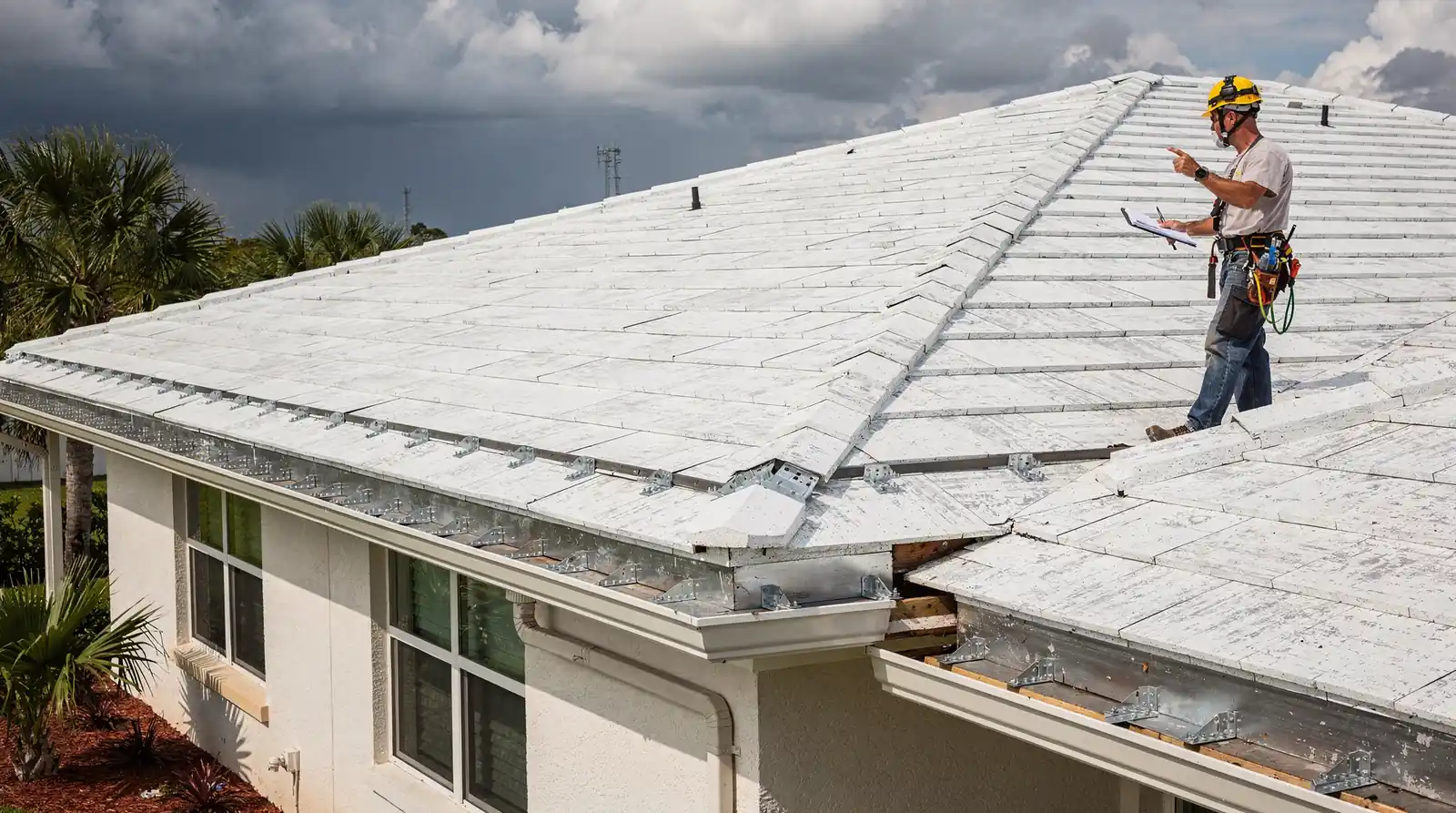
What makes a roof hurricane-proof in Florida?
A hurricane-proof roof resists wind uplift, blocks water intrusion, and prevents structural failure during extreme storms. Florida endures more hurricanes than any other U.S. state, facing threats from tropical storms through Category 5 systems. Without these three defensive layers, a roof becomes the entry point for catastrophic building damage.
The foundation of hurricane resistance starts with the Florida Building Code. The state created modern construction standards that now define roof performance. Southwest Florida falls within a high-wind region where design wind speeds are among the highest in the nation. This area enforces the nation’s most stringent roofing requirements.
How does wind uplift destroy a roof?
Wind uplift tears roofing materials away from the deck. As wind flows over a building, it creates negative pressure above the roof surface. That suction pulls shingles, tiles, or metal panels upward. A hurricane-resistant installation counters this with reinforced fastening patterns and sealed edges. Every component, from the decking to the ridge cap, must form a continuous load path that transfers wind forces to the walls and foundation.
What role does water intrusion play in roof failure?
Water intrusion causes the majority of non-structural hurricane damage. Driven rain penetrates through gaps in flashing, around fasteners, and under lifted shingles. Once moisture enters the roof assembly, it degrades sheathing, promotes mold, and compromises interior finishes. Effective hurricane protection requires secondary water barriers, such as self-adhering underlayment, that seal around nail penetrations. These barriers keep water out even when the outer roof covering sustains damage.
Structural failure represents the final and most dangerous threat. When wind enters a building through a breached roof, internal pressure escalates rapidly. Walls bow outward. The roof deck separates from the framing. The entire structure can collapse within seconds. Preventing this cascade demands impact-rated coverings, robust deck attachments, and strict adherence to HVHZ uplift standards. Homes built to these specifications withstand forces that destroy older, non-compliant roofs.
What is the best roof for hurricanes?
A standing-seam metal roof provides the strongest defense against hurricane-force winds for Southwest Florida properties. This system combines interlocking panels with concealed fasteners to resist wind uplift when properly engineered and installed. Homeowners in Fort Myers, Naples, and Cape Coral face extreme wind exposure during storm season. The right roofing material prevents catastrophic structural failure.
How does standing-seam metal roofing withstand hurricane winds?
The engineering behind standing-seam metal roofs centers on continuous interlocking panels. Concealed fasteners eliminate exposed screw points where wind can gain purchase. This design transfers uplift forces across the entire roof deck rather than concentrating stress at individual attachment points. The lightweight construction also reduces the structural load on walls and foundations during prolonged storm events.
What other roofing materials offer hurricane protection?
Impact resistant roofing extends beyond metal systems. Properly installed concrete tile and clay tile deliver excellent storm performance in coastal environments. High-wind-rated asphalt shingles also provide reliable protection when installed to manufacturer specifications for the High-Velocity Hurricane Zone. Each material requires precise attachment methods. The installation quality determines real-world performance more than the material alone.
A wind rated roofing Florida system must meet the Florida Building Code standards for the High-Velocity Hurricane Zone. The code mandates specific attachment schedules, underlayment requirements, and edge metal details for high-wind areas. Without these elements, even premium materials fail prematurely.
Replace Your Roof installs shingle, metal, slate, tile, and flat roof systems across Florida properties. The company’s metal roofing installations incorporate the concealed-fastener standing-seam profiles that perform best in hurricane conditions. Concrete and clay tile options receive the reinforced deck attachments required for coastal wind zones. Every installation follows the elevated standards that Southwest Florida’s exposure demands.
How does wind rated roofing Florida work?
Wind rated roofing Florida systems resist hurricane forces through engineered attachments and reinforced structural components. A properly designed wind-resistant roof combines secure fasteners, strengthened decking, and effective water barriers to prevent catastrophic failure during extreme storms.
The mechanism centers on uplift resistance. Hurricane winds create negative pressure above the roof surface, generating suction that pulls roofing materials upward. Wind-rated assemblies counter this force at every connection point. Fasteners anchor the roof deck to the framing with closer spacing and higher pull-through strength than standard installations. Reinforced decking, typically thicker plywood or oriented strand board, distributes wind loads across the entire roof plane rather than concentrating stress at isolated points.
What wind speed standards apply to Southwest Florida roofs?
Southwest Florida falls within the highest-risk-risk wind zones under the Florida Building Code. Every county in the region faces exposure to hurricane-force winds, though exact design requirements vary by specific location. Coastal areas of Lee, Collier, and Sarasota counties demand the most stringent uplift ratings. Roofing systems installed in these zones must meet minimum wind-speed thresholds that reflect the region’s history of major hurricane landfalls.
How do attachments and decking work together in a wind-rated system?
Secure attachments form the first line of defense. Fasteners connect each layer of the roof assembly, from the decking to the framing and from the covering material to the deck. These connections create a continuous load path that transfers wind forces to the building’s foundation. Reinforced decking provides the second critical element. Thicker panels resist flexing under pressure cycles, preventing the progressive loosening that leads to partial or complete roof loss during sustained winds.
Replace Your Roof exceeds the roofing standards of every location the company serves, including local building codes across Florida. Standards vary based on factors such as location, building type, and municipal requirements. The company’s approach ensures that each installation meets or surpasses the specific wind-resistance demands of Southwest Florida’s high-risk coastal environment.
What is impact resistant roofing?
Impact resistant roofing consists of materials and assemblies engineered to withstand the strike of wind-borne debris without compromising the roof’s protective barrier. This capability is critical in Southwest Florida, where hurricane-force winds routinely turn loose objects into projectiles that puncture standard roofing systems.
The core function of these systems is preventing penetration. A single breach in the roof deck allows pressurized wind to enter the building envelope, a scenario that leads to catastrophic structural failure. Impact-rated products undergo rigorous laboratory testing. They must resist steel balls and other missiles fired at specific speeds without cracking, tearing, or allowing water intrusion.
How does impact resistance affect insurance eligibility in Florida?
Florida’s building code has expanded the Wind-Borne Debris Region as of 2026. Impact-rated openings are no longer optional upgrades in these zones. According to Triple Crown Homes, they represent the required baseline for insurance eligibility. Homeowners in Southwest Florida communities like Cape Coral and Naples face policy non-renewal or steep premium increases without documented impact protection on both the roof and all fenestrations.
What materials qualify as impact resistant?
Several roofing types meet the stringent requirements for wind rated roofing Florida jurisdictions enforce. The options include:
- Class 4 asphalt shingles with polymer-modified asphalt and reinforced backings
- Standing-seam metal panels with concealed fasteners and high-gauge steel
- Concrete and clay tile installed with mechanical fasteners over a sealed underlayment
- Modified bitumen and TPO membranes for low-slope commercial applications
Each material carries a specific impact rating from Underwriters Laboratories or FM Approvals. The rating confirms the product survived testing without structural compromise.
Replace Your Roof employs top-quality materials and the latest techniques to ensure roof longevity and functionality. Proper installation determines whether an impact-rated product performs as designed. Fastener patterns, underlayment selection, and edge detailing all contribute to the system’s ultimate resistance. A roof that sheds debris strikes without tearing protects the interior from water damage and preserves the building’s structural integrity throughout the storm cycle.
How do I prepare my roof for hurricane season?
Preparing a roof for hurricane season in Southwest Florida requires a systematic inspection and targeted reinforcement. A hurricane resistant roof Florida installation begins with identifying vulnerabilities before storm warnings appear. Homes built to post-2002 Florida Building Code standards experience less damage than older structures, according to Triple Crown Homes research, making proactive preparation a measurable financial safeguard.
What should a pre-hurricane roof inspection include?
A thorough inspection examines loose shingles, damaged flashing, and clogged gutters. The Hurricane Roof Preparation Florida 2026 guide identifies these as primary failure points during high-wind events. Debris-filled gutters prevent proper water drainage, forcing moisture under roofing materials. Damaged flashing around chimneys, vents, and skylights creates entry points for wind-driven rain. Each unchecked vulnerability multiplies the risk of interior water damage during a storm.
Which roof upgrades provide the best hurricane protection?
Reinforcing roof-to-wall connections and upgrading to impact resistant roofing materials deliver the strongest defense. A properly engineered, wind-resistant roofing system with secure attachments, reinforced decking, and effective water protection forms the foundation of hurricane readiness. Standing-seam metal roofing offers strong wind resistance for coastal properties. High-wind-rated asphalt shingles and concrete tile systems also perform well when installed with upgraded fastening patterns.
Routine inspections identify weaknesses that compromise even quality materials. Replace Your Roof provides fast and efficient roof repair services addressing these vulnerabilities before they escalate. The company’s technicians use top-quality materials and current techniques to ensure long-term roof functionality. A pre-season inspection reduces catastrophic damage risk by catching problems when repairs remain straightforward.
Wind rated roofing Florida products carry specific design pressure approvals matching Southwest Florida’s High-Velocity Hurricane Zone requirements. Property owners in Fort Myers, Naples, and Cape Coral benefit from materials tested to withstand the region’s extreme wind loads. The combination of professional inspection, timely repair, and strategic material upgrades creates a defense system that protects both the structure and its occupants.
What are the Florida Building Code requirements?
The Florida Building Code sets strict wind-resistance standards for roofing across the state. Southwest Florida falls under the most demanding tier of these requirements. The region’s hurricane resistant roof Florida standards reflect decades of storm damage data.
South Florida and the Keys face the highest hurricane risk in the continental United States. This designation places certain coastal counties inside the High-Velocity Hurricane Zone (HVHZ). Roofing systems installed in this zone must meet the most stringent construction standards in the country.
What wind speeds must a roof withstand in the HVHZ?
Design wind speeds in the High-Velocity Hurricane Zone are among the highest in the nation. Hurricane Andrew struck the region with 165 mph winds in 1992. That storm directly led to the creation of the modern Florida Building Code.
The code’s requirements vary by location, building type, and local building codes. A roof in Cape Coral faces different uplift pressures than one in inland Sarasota. Wind rated roofing Florida products must carry documentation proving performance at the specified design pressures.
How do impact standards affect roofing material choices?
Impact resistant roofing materials must pass missile-impact testing before installation in the HVHZ. The code mandates protection against wind-borne debris for all exterior openings and roof coverings. Roofing underlayment, fasteners, and edge details all fall under these requirements.
Replace Your Roof prioritizes durability and reliability in every project. The company ensures each installation meets or exceeds local code requirements. Standards vary based on location, building type, and local building codes, and the company accounts for these factors in every Southwest Florida project.
The best roof for hurricanes combines code-compliant materials with precise installation. A properly fastened standing-seam metal roof or high-wind-rated asphalt shingle system performs differently under the same 185 mph design load. Code compliance depends on both product selection and installation quality.
How can I get insurance discounts for my roof?
Insurance discounts for roofs in Southwest Florida hinge on documented wind resistance and code compliance. A roof that meets the Florida Building Code’s High-Velocity Hurricane Zone standards triggers substantial premium reductions. Homes built to post-2002 code standards experience less damage, according to Triple Crown Homes, which translates directly into fewer claims and lower rates.
The most dramatic savings come from structural upgrades. Moving from traditional wood-frame construction to Insulated Concrete Form (ICF) or Concrete Block (CBS) construction slashes insurance premiums. This concrete advantage represents a financial return that compounds annually, not a one-time rebate.
What roof features qualify for the largest insurance discounts?
Impact-resistant roofing materials and wind-rated roofing systems certified for Florida’s wind-borne debris regions deliver the highest discounts. In 2026, the Wind-Borne Debris Region expanded across Southwest Florida, making impact-rated protection the required baseline for insurance eligibility. Roofs without this certification lose eligibility entirely.
Secondary discounts apply to specific installation methods. Secondary water barriers, reinforced deck attachments, and sealed roof decks each contribute to a property’s wind mitigation inspection score. A higher score reduces the premium multiplier applied to the dwelling coverage.
How does a wind mitigation inspection affect premiums?
A certified wind mitigation inspection documents every hurricane-resistant feature on the roof. Inspectors record the roof shape, deck attachment method, roof-to-wall connections, and the presence of a secondary water barrier. Each verified feature reduces the policy’s windstorm premium component.
Replace Your Roof provides roofing services that consistently exceed industry standards in durability and reliability. The company’s installations meet the documentation requirements insurers demand for mitigation credits. Property owners who skip the inspection forfeit discounts they have already earned through construction quality.
Conclusion
A certified wind mitigation inspection documents every hurricane-resistant feature on the roof, and property owners who skip the inspection forfeit discounts they have already earned through construction quality. Schedule a professional inspection to verify your roof meets Southwest Florida’s High-Velocity Hurricane Zone requirements and secure the insurance savings your investment deserves.