
Florida asphalt shingle roofs last 15 to 25 years, while metal roofs endure 40 to 70 years and tile roofs exceed 50 years. Florida Statute § 627.7011(5) does not limit metal roofs to 15 years. Regular inspections and maintenance separate a 15-year roof from one lasting 25 years.
How does Florida’s climate affect roof lifespan?
Florida’s climate accelerates roof deterioration through three relentless forces. Intense ultraviolet radiation, extreme humidity, and hurricane season combine to cut roof lifespan well below national averages. A roof that delivers 25 years of service in milder states often survives just 17 years in Florida, according to Bigfoot Roofing’s 2026 analysis. The loss of 8 years represents thousands of dollars in premature replacement costs for commercial property owners.
What makes Florida’s UV radiation so damaging to roofing?
Solar radiation in Florida bombards roofing materials year-round. The constant UV exposure breaks down asphalt shingle binders and fades protective coatings. Shingle roof lifespan Florida estimates drop sharply because ultraviolet light degrades the oils that keep shingles flexible. Brittle shingles crack, curl, and lose their waterproof seal.
Why does humidity shorten roof life in Florida?
Moisture intrusion works from both outside and inside the roof assembly. High ambient humidity promotes algae and moss growth on shingle surfaces. Trapped moisture in attic spaces rots decking and rusts fasteners. Tile roof lifespan benefits from clay and concrete’s natural resistance to moisture, but the underlayment beneath tiles still faces constant humidity stress. Metal roofing systems resist moisture-related decay better than organic materials.
How do hurricanes and storms affect roof longevity?
Wind-driven rain and flying debris create acute damage that compounds over time. Even when a roof survives a storm without obvious failure, lifted shingles and loosened fasteners set the stage for future leaks. The cumulative effect means when to replace roof Florida decisions arrive sooner than property owners expect. Regular inspections catch this progressive damage before it becomes catastrophic.
Replace Your Roof prioritizes durability and reliability in every commercial installation. The company’s approach accounts for Florida’s unique climate demands, ensuring each roofing system delivers maximum service life despite harsh environmental conditions. Property owners who understand these climate factors make better decisions about material selection and maintenance scheduling.
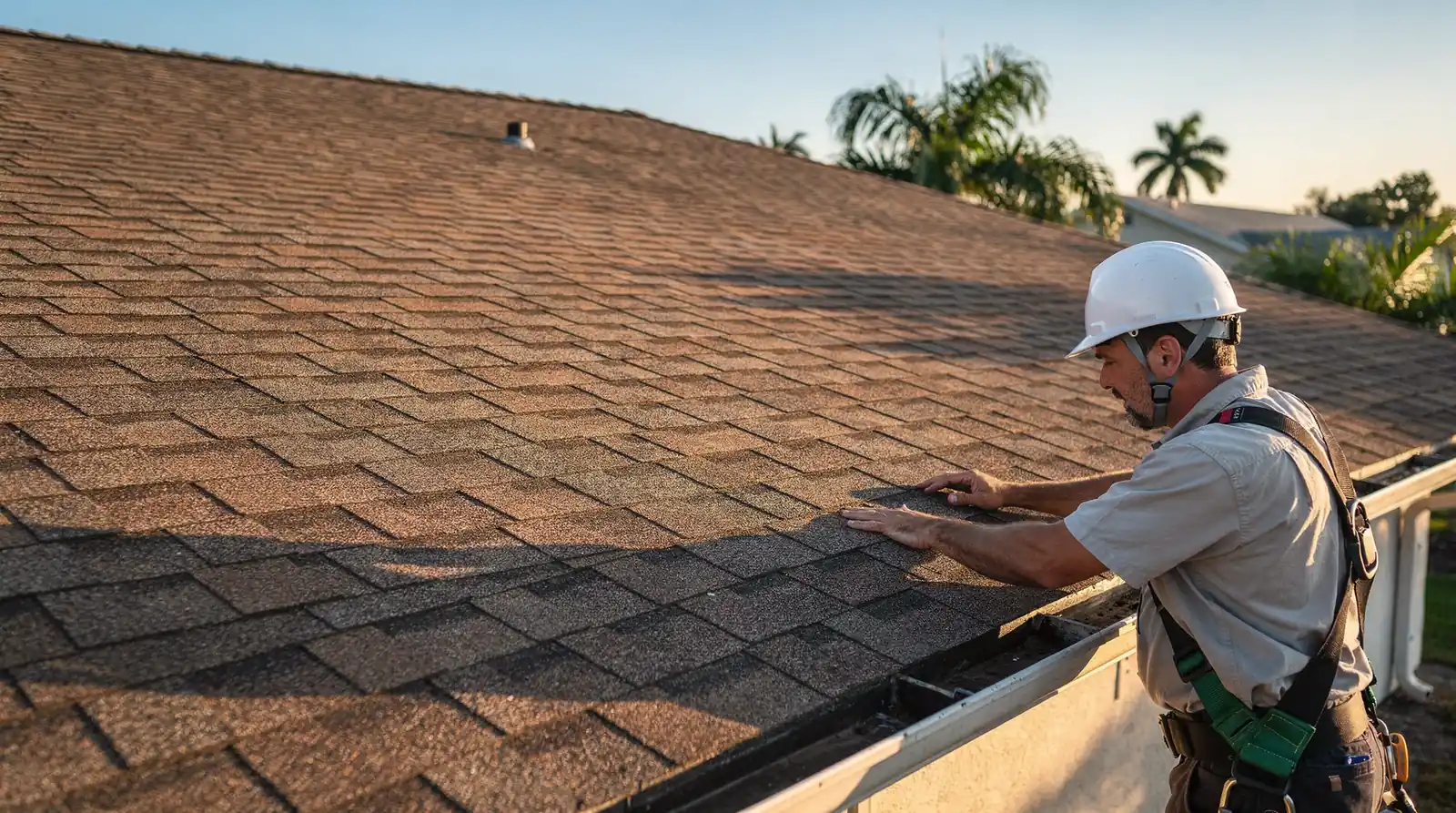
What is the shingle roof lifespan Florida?
A shingle roof lifespan Florida ranges from 10 to 40 years, with typical asphalt shingle installations lasting 15 to 25 years. Florida’s intense UV radiation, high humidity, and hurricane-force winds cut into those numbers compared to national averages. Regular inspections and maintenance separate a roof that fails at 15 years from one that reaches 25.
Material quality and installation precision drive the wide 10-to-40-year range. Lower-grade three-tab shingles sit at the bottom of that spectrum. Architectural shingles, built with thicker construction and better wind resistance, push toward the upper end. The Erie Home publication notes that asphalt roofs in Florida generally last 10 to 40 years, depending on those variables. Without proper attic ventilation, trapped heat and moisture accelerate granule loss and deck rot. A roof that would give 25 years elsewhere often gives 17 here.
What shortens asphalt shingle life in Florida?
Three environmental factors dominate. Constant UV exposure breaks down the asphalt binder, causing shingles to become brittle and crack. High humidity feeds mold and algae growth beneath the shingle surface. Storm-driven wind uplift tears shingles loose at the edges, exposing the underlayment to water intrusion. Poor installation compounds every one of these threats. Nails placed too high or driven at the wrong angle create failure points that storms exploit.
How does maintenance extend shingle roof lifespan Florida?
Scheduled inspections catch small problems before they become structural failures. Lifted shingles get resealed. Cracked or missing shingles get replaced immediately. Clean gutters prevent water backup at the eaves. The Replace Your Roof team uses top-quality materials and the latest techniques to ensure roof longevity and functionality. Property owners who commit to twice-yearly inspections routinely see their roofs reach the 20-to-25-year mark. Those who wait for visible leaks often face full replacement a decade sooner. Recognizing the warning signs of roof failure helps owners act before water damage spreads into the structure.
What is the tile roof lifespan in Florida?
A tile roof lifespan in Florida reaches 50 years or more, making it one of the most durable roofing options for the state’s punishing climate. Clay and concrete tile systems routinely deliver 30 to 50-plus years of service, far outpacing the 15 to 25 years typical of asphalt shingles. The longevity edge comes from tile’s inherent resistance to UV degradation, salt air, and high humidity.
What makes tile roofs last so long in Florida’s climate?
Tile roofs resist the three forces that destroy other materials fastest. Intense ultraviolet radiation breaks down asphalt binders within a decade. Salt-laden coastal air accelerates metal corrosion. High humidity feeds organic growth that rots organic underlayments. Fired clay and concrete tiles remain dimensionally stable through all of it. They do not warp, curl, or lose granules. The material itself simply does not degrade from sun exposure the way petroleum-based products do.
How does underlayment affect tile roof longevity?
The underlayment beneath the tiles determines whether a system reaches 50 years or fails at 30. Tile itself lasts indefinitely, but the waterproofing layer underneath faces constant attack from heat and moisture. A deteriorated underlayment allows water to reach the decking even when tiles look perfect. Property owners who replace underlayment at the 20- to 25-year mark often extend total system life well past 50 years. Those who ignore it face leaks and structural damage while the tiles above remain intact.
Replace Your Roof handles every aspect of roof needs, from inspection to replacement, using high-quality materials. The company’s tile roofing expertise includes evaluating underlayment condition, a step many property owners overlook until water stains appear on ceilings. When to replace roof Florida considerations shift dramatically with tile systems. The tiles themselves rarely need replacement. The underlayment and flashings do. A professional inspection identifies whether the waterproofing layer has reached the end of its service life, preventing a manageable underlayment replacement from becoming a full decking restoration.
How does the Florida 15-year roof rule affect you?
Florida Statute § 627.7011(5) prevents insurers from denying coverage solely because a roof is less than 15 years old. This protection applies regardless of the roofing material installed. A roof aged 14 years receives the same statutory shield as one installed last month. Homeowners who misunderstand this rule risk losing coverage they are legally entitled to keep.
The statute does not declare roofs obsolete at 15 years. Some contractors misrepresent this point to steer clients away from metal roofing systems. The law contains no lifespan limit and no material-specific expiration. It functions as a consumer protection, not a replacement mandate.
What does the 15-year rule actually require?
The rule addresses insurance eligibility, not structural integrity. Insurers may still require inspections after 15 years. They cannot, however, refuse to write a policy based on age alone during those first 15 years. This distinction matters for property owners evaluating when to replace roof Florida systems.
Does the rule apply differently to metal roofs?
No. The statute makes no distinction between asphalt shingles, metal panels, or tile systems. A shingle roof lifespan Florida estimate of 15 to 25 years does not alter the legal protection. A tile roof lifespan exceeding 50 years receives identical treatment under the law. The rule’s uniform application eliminates material-based discrimination in underwriting decisions.
Replace Your Roof exceeds local roofing standards across every service area. Compliance with Florida building codes remains central to each installation. The company’s technical approach ensures roofs meet statutory requirements while delivering long-term durability. Property owners benefit from systems engineered for both regulatory compliance and environmental resilience.
When to replace roof Florida?
A roof replacement in Florida becomes necessary when age exceeds the material’s expected lifespan, visible damage appears, or an inspection reveals structural compromise. Florida’s climate accelerates wear, making proactive replacement decisions critical for property protection.
What are the signs a Florida roof needs replacement?
Visible indicators signal when replacement is overdue. Curling or missing shingles, granule loss exposing the underlayment, and water stains on interior ceilings all point to a failing system. A roof that has surpassed its material-specific lifespan demands immediate evaluation. Shingle roof lifespan Florida typically ranges from 15 to 25 years, while tile roof lifespan extends to 50 years or more. Age alone triggers replacement urgency once those thresholds pass.
How does maintenance affect replacement timing?
Consistent upkeep directly extends service life. Regular inspections and maintenance separate a roof that lasts 15 years from one that reaches 25 in Florida’s punishing conditions. Property owners who skip annual inspections lose years of functional roofing. That lost time translates into premature replacement costs and potential interior water damage. Failed inspections by insurance providers also force replacement on an accelerated timeline, regardless of the roof’s apparent condition.
What happens after the decision to replace?
Replace Your Roof provides fast, efficient roof repair and replacement services to protect homes across Florida. The company’s technicians assess structural integrity, remove deteriorated materials, and install systems engineered for the state’s UV exposure and wind loads. A properly timed replacement prevents the cascading failures that follow a roof collapse: interior water intrusion, mold growth, and compromised framing. Florida property owners who act on early warning signs avoid emergency replacements during hurricane season when contractor availability tightens and prices spike.
Conclusion
Florida property owners who understand the difference between statutory insurance protections and actual material lifespan make smarter replacement decisions. A tile system reaching 30 years demands underlayment evaluation, not panic. The 15-year rule protects your coverage, not your roof’s condition. Schedule a professional inspection to determine whether your system needs maintenance or full replacement, then act on the findings before Florida’s climate forces an emergency decision.