
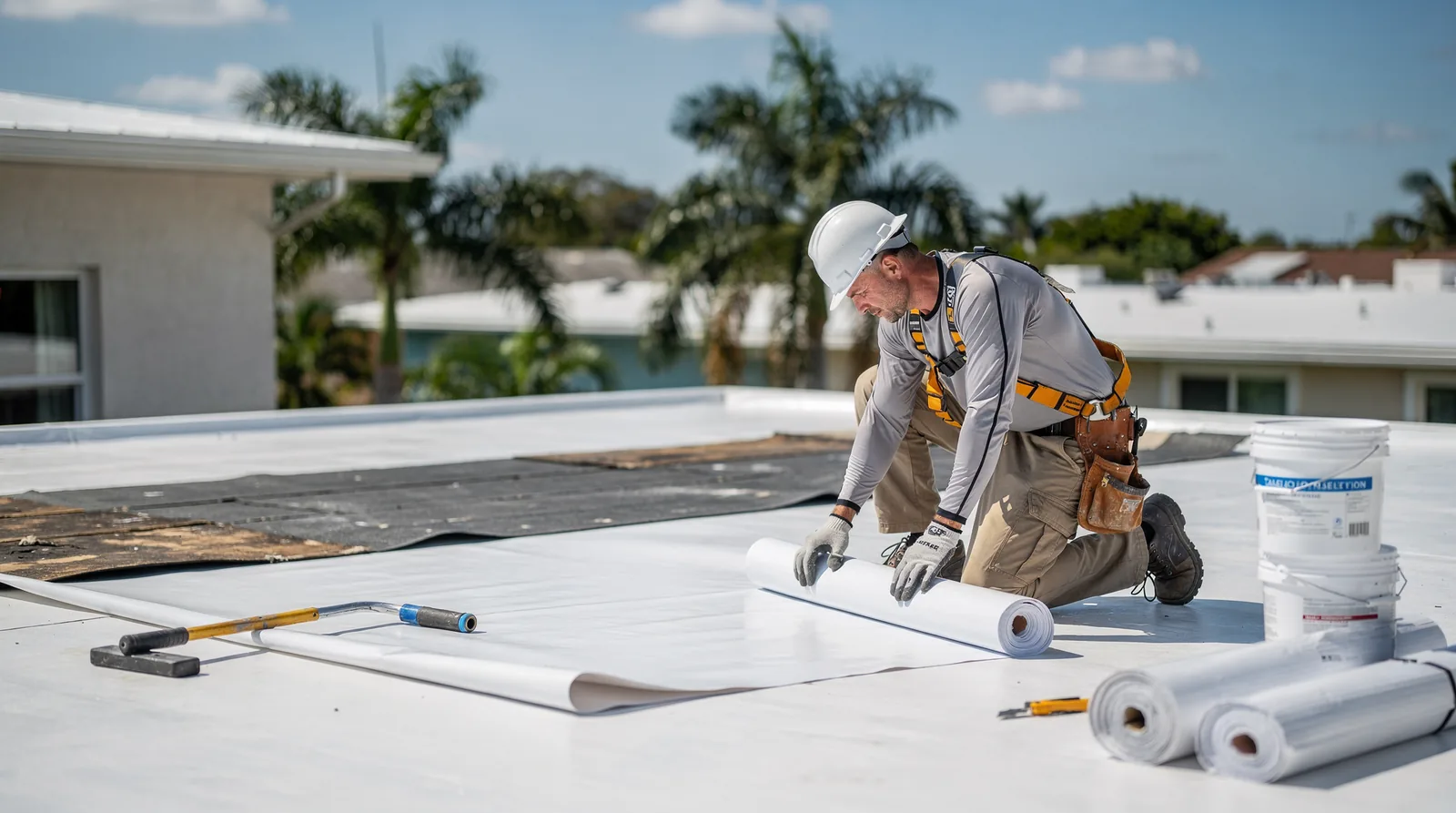
Flat roof replacement in Southwest Florida demands a system that resists ponding water and meets strict building codes. TPO offers heat-welded seams and energy reflectivity, while modified bitumen provides a durable multi-ply asphalt base with a granulated cap sheet. Replace Your Roof installs both systems for commercial properties.
Why choose TPO or modified bitumen for your flat roof?
TPO roof Cape Coral and Southwest Florida properties benefit from a membrane that reflects intense sunlight. Modified bitumen roof Florida systems offer a longer track record and simpler spot repairs. Both materials solve different problems for commercial and residential low-slope roofs across the region.
How does TPO hold up under Florida’s sun?
White TPO reflects solar radiation instead of absorbing it. Heat-welded seams create a monolithic surface that resists ponding water and wind uplift. For buildings in Cape Coral and Fort Myers, that reflectivity cuts cooling loads during the eight-month cooling season. The material’s single-ply construction keeps installation fast, which matters when afternoon thunderstorms roll in without warning.
Why do so many Sarasota buildings still use modified bitumen?
A flat roof Sarasota property owner often needs a roof that handles regular foot traffic from HVAC maintenance. Modified bitumen delivers that durability through its multi-ply, asphalt-based build. A granulated cap sheet shields the waterproofing layers from UV degradation. Spot repairs are straightforward: a contractor can patch a small puncture without replacing large sections. Coastline Roofs notes that modified bitumen has a longer track record in Florida, and that proven history matters when a building must stay dry through hurricane season.
Replace Your Roof prioritizes durability and reliability in every installation. The company evaluates drainage, insulation condition, and traffic patterns before recommending either system. That assessment prevents the costly mistake of installing the right material on the wrong building.
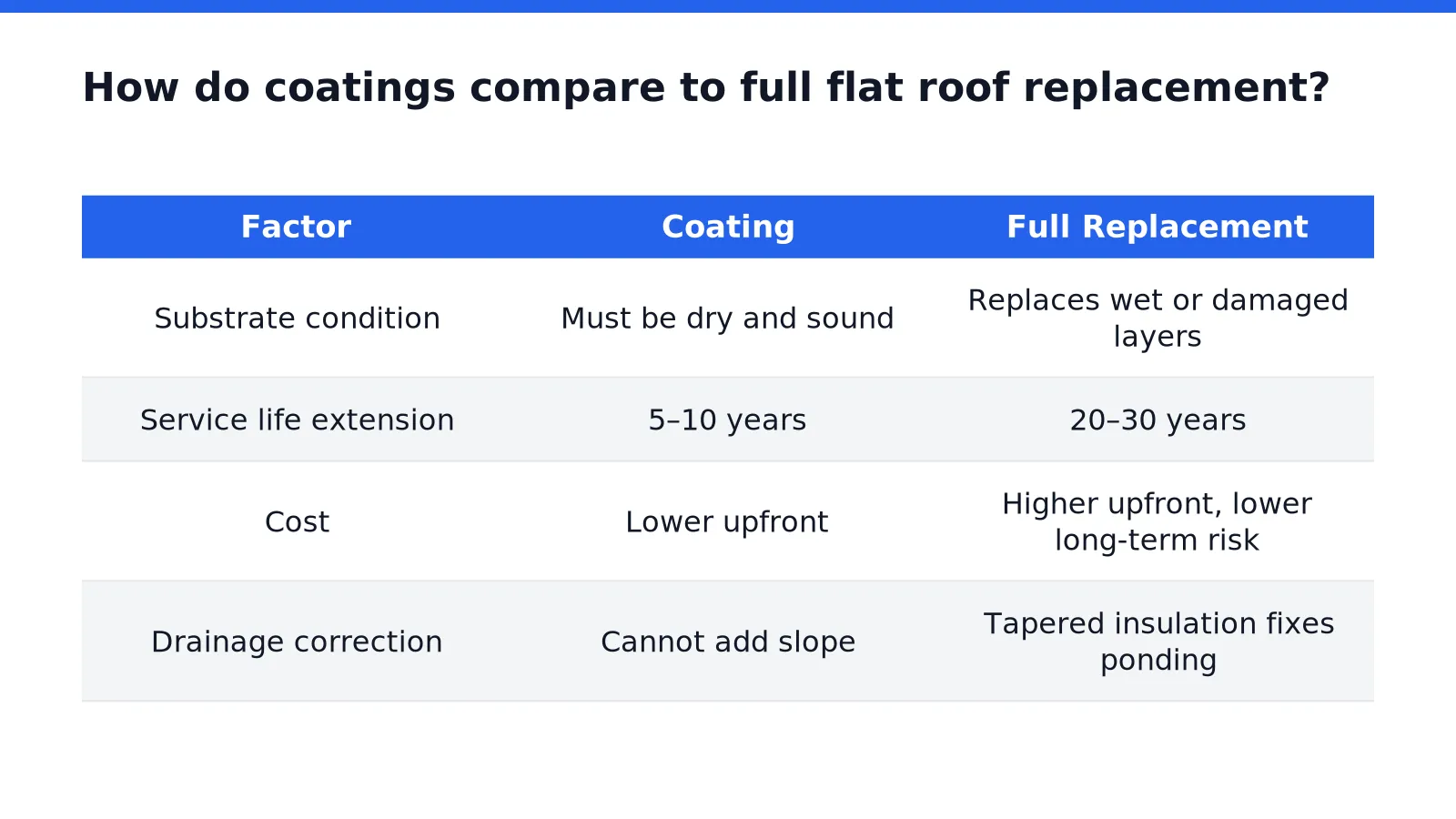
How do coatings compare to full flat roof replacement?
A coating restores a sound, dry roof without a tear-off. A full flat roof replacement Florida removes the failed membrane and installs new material. The right choice depends on what hides beneath the surface.
When does a coating make sense?
Coatings work when the existing membrane is intact and dry. A reflective coating extends service life and cuts cooling costs. But coatings cannot fix saturated insulation or failed seams. Flat roof Sarasota properties with ponding water need more than a surface treatment. Flat roofs in Florida fight standing water. A few days of ponding after every storm breaks down membranes, finds every weak seam and eventually soaks the insulation. A coating applied over wet substrate traps moisture and accelerates deck rot.
What triggers a full replacement?
Full replacement becomes necessary when water has compromised the insulation or decking. Replace Your Roof handles every aspect of a roof’s needs, from inspection to complete replacement. The company uses top-quality materials and the latest techniques to ensure longevity and functionality. A modified bitumen roof Florida system or a TPO roof Cape Coral installation starts with a dry substrate. No coating can substitute for that foundation.
Replace Your Roof provides comprehensive flat roofing services that address both restoration and replacement. A thorough inspection determines whether the existing roof qualifies for a coating or requires a tear-off. Guessing wrong doubles the cost.
What should Southwest Florida property owners expect?
Property owners in Southwest Florida face a punishing combination of environmental stressors that accelerate flat roof deterioration. Extreme UV exposure, 62 inches of annual rainfall concentrated in a six-month wet season, and daily thermal cycling with midday surface temperatures approaching 180°F all attack roofing membranes relentlessly. Hurricane season wind stress compounds these threats, turning minor vulnerabilities into catastrophic failures within a single storm cycle.
Replace Your Roof addresses these regional challenges through precise drainage correction and code-compliant installation. The company exceeds the roofing standards of every location it serves, including the specific building code requirements that govern flat roof replacement Florida projects. Standards vary based on building type and local codes, and the company’s technicians calibrate every installation accordingly.
How does ponding water damage flat roofs in Florida?
Standing water destroys flat roof membranes faster than UV exposure alone. Water finds every weak seam, breaks down the membrane surface, and eventually saturates the insulation beneath. Once insulation absorbs moisture, the roof’s thermal performance collapses and structural decking faces rot risk.
Replace Your Roof corrects drainage at the source rather than patching leaks. The company installs tapered insulation to create slope toward drains, builds crickets behind curbs and at walls, and adds or enlarges scuppers and drains. These measures eliminate ponding permanently.
What roofing systems hold up best in Cape Coral and Fort Myers?
The Fort Myers and Cape Coral area demands membranes that withstand intense sun and torrential rain simultaneously. For TPO roof Cape Coral installations, heat-welded seams provide a monolithic barrier against standing water. Modified bitumen roof Florida systems offer multi-ply asphalt-based protection with a granulated cap sheet that handles foot traffic and resists puncture. Both systems perform when drainage is engineered correctly.
Flat roof Sarasota properties benefit from the same rigorous approach. Replace Your Roof evaluates each building’s exposure, deck condition, and drainage profile before recommending a system. The company’s commitment to exceeding local standards means every installation meets or surpasses Florida Building Code requirements for wind uplift and waterproofing integrity.
Conclusion
A thorough inspection determines whether a coating extends service life or a full replacement corrects underlying damage. Guessing wrong doubles the cost. Property owners in Southwest Florida must evaluate drainage, insulation condition, and traffic patterns before choosing between TPO, modified bitumen, or a coating.