
Widespread shingle loss, exposed decking, and persistent interior leaks after a hurricane signal a roof needs replacement in Florida. Replace Your Roof recommends a professional inspection when damage covers a significant portion of the surface. Granule loss in gutters and visible daylight through the roof deck confirm structural compromise requiring full replacement.
What counts as roof damage after a hurricane?
Hurricane damage is often hard to judge from the yard because much of it is small and scattered. A shingle lifts at one corner. A tile slips half an inch out of line. These subtle failures matter. High winds and driving rain expose existing weaknesses, and roofs in poor condition are far more likely to suffer serious damage during a storm. Even the loss of a few shingles or tiles leads to significant water intrusion and costly interior repairs.
What are the most common types of roof damage after hurricane events?
Florida homeowners typically encounter three categories of storm-related roof failure:
- Lifted or displaced materials: Shingles, tiles, or metal panels that shift out of position without fully detaching
- Punctures and tears: Wind-driven debris creating openings in the roof membrane or underlayment
- Water intrusion: Rain entering through compromised flashing, seams, or missing materials
A roof more often needs replacement after a hurricane when damage is widespread, the decking underneath is hurt, or leaks keep returning after repairs. A few missing tiles or one lifted section often points toward repair instead.
How does a hurricane roof inspection identify hidden damage?
A professional inspection examines areas that remain invisible from ground level. Technicians check ridge lines, valleys, flashing, and the underside of the decking. Small failures at these points allow water to travel far from the original entry location. The storm may have passed, but the home remains disrupted. Power may be out, water may be coming through a ceiling, and insurance paperwork may be pending. For storm damaged roof Cape Coral properties, localized wind gusts create damage patterns that differ from inland areas. Coastal exposure accelerates material fatigue. A qualified roof repair assessment determines whether isolated fixes suffice or whether structural replacement becomes necessary.
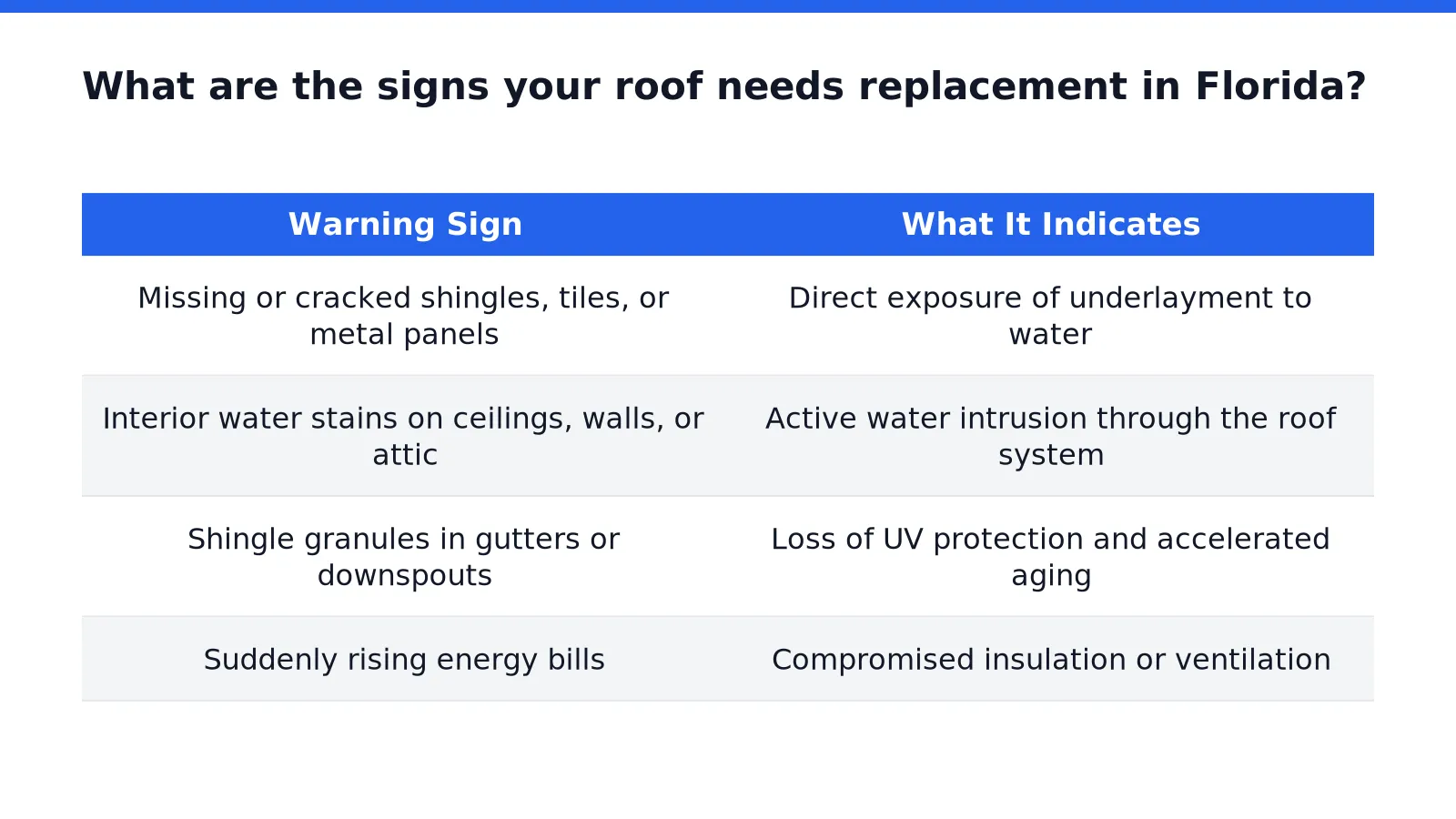
What are the signs your roof needs replacement in Florida?
Florida roofs fail faster than those in most states. Intense UV exposure, daily rain, humidity, and hurricane-season winds push roofing materials to their limits, often within 8 to 12 years of installation. Homeowners who catch warning signs early can usually repair instead of replace. Missing those signs leads to structural damage and costly interior repairs.
What visible damage indicates a roof problem?
Visible damage ranks among the four most common warning signs in Florida. Missing or cracked shingles, tiles, or metal panels expose the underlayment to water intrusion. Even a few displaced shingles allow moisture to reach the decking. Once water penetrates, rot spreads quickly in Florida’s humid climate.
Where do interior water stains appear?
Interior water stains on ceilings, walls, or in the attic signal active roof failure. Stains often appear days after a storm, once water has traveled through insulation and drywall. A single brown ring on a ceiling indicates a breach somewhere above. Multiple stains across different rooms point to widespread membrane or flashing failure.
What do shingle granules in gutters mean?
Shingle granules collecting in gutters or near downspouts indicate accelerated wear. Granules protect asphalt shingles from UV degradation. When they wash away, the underlying asphalt bakes and cracks. Florida’s intense sun accelerates this process faster than northern climates.
The four warning signs at a glance:
Replace Your Roof serves Florida property owners with durability and reliability as core priorities. The company’s roof replacement assessments evaluate each warning sign against local climate demands. A professional hurricane roof inspection identifies whether damage warrants repair or full replacement.
How does a hurricane roof inspection work?
A hurricane roof inspection is a systematic evaluation of a roof’s structural integrity after severe weather. The process identifies hidden damage that threatens a Florida home’s long-term stability. Identifying roof damage early is not just about fixing a few shingles; it is about protecting an entire home from potential structural issues.
The inspection follows a defined sequence. Technicians examine the roof surface, flashing, vents, and drainage systems. They document every sign of compromise, from lifted shingles to subtle decking shifts. Prompt attention to warning signs saves homeowners from expensive repairs and provides peace of mind.
What does an inspector look for first?
The initial pass focuses on visible surface damage. Missing shingles, cracked tiles, and dented metal panels receive immediate documentation. Inspectors also check for granule loss around downspouts and gutters, a common indicator of aging or storm-stressed materials.
How long does a hurricane roof inspection take?
Most Florida residential inspections take around an hour or two, depending on roof size and condition. Larger homes or complex roof geometries extend that window. The inspector photographs every finding and compiles a condition report for the homeowner’s records.
Replace Your Roof offers exceptional roofing services that consistently exceed industry standards in durability and reliability. The company merges traditional craftsmanship with modern technology, emphasizing excellence, safety, and commitment to customer satisfaction. For Florida homeowners facing storm damaged roof Cape Coral conditions, a professional hurricane roof inspection reveals what ground-level observation misses.
The inspection concludes with a documented assessment. Homeowners receive clear guidance on whether roof damage after hurricane events warrants repair or full replacement. Understanding the signs roof needs replacement Florida properties display helps owners act before minor issues become structural failures.
When should you replace a storm damaged roof in Cape Coral?
A storm damaged roof in Cape Coral requires replacement when leaks persist, the roof deck is compromised, or widespread structural weakness makes repairs unreliable. Hurricane-force winds and driving rain expose vulnerabilities that partial fixes cannot resolve. Postponing replacement invites moisture intrusion that deteriorates framing and sheathing. A compromised roof deck loses its ability to resist wind uplift during the next storm. The result is escalating interior damage and safety hazards that far exceed the cost of timely replacement.
What are the clearest signs a roof needs replacement in Florida after a hurricane?
Active roof damage after hurricane events often hides in plain sight. The most definitive signs roof needs replacement Florida homeowners should recognize include water stains spreading across ceilings, daylight visible through attic boards, and sagging sections of the roofline. Leaks rank as the most urgent indicator. Even small leaks introduce moisture that weakens the underlying roof deck and framing. Once these structural components deteriorate, the entire roof assembly becomes vulnerable to wind uplift. A roof in this condition cannot be reliably patched.
Other warning signs demand immediate attention:
- Persistent leaks that return after multiple repair attempts
- Sagging or spongy sections when walked upon by an inspector
- Displaced or missing shingles across more than 30 percent of the roof surface
- Granule loss clogging gutters and downspouts, signaling advanced shingle deterioration
How does a hurricane roof inspection determine replacement versus repair?
A professional hurricane roof inspection examines more than surface materials. The inspector evaluates the roof deck, underlayment, flashing, and sealants around vents and chimneys. High winds often cause hidden damage: lifted nails, cracked sealant, and micro-fractures in tiles that remain invisible from ground level. When the decking shows rot, delamination, or water saturation, replacement becomes the only safe option. Repairs applied to a weakened substrate fail prematurely. The inspection report provides homeowners with a documented basis for insurance claims and contractor decisions.
Why Cape Coral properties face elevated replacement risks
Cape Coral’s coastal exposure amplifies storm forces. Wind-driven rain penetrates small openings that inland roofs would shed without issue. Salt air accelerates corrosion of fasteners and flashing. A storm damaged roof Cape Coral property owners delay replacing often conceals progressive decay beneath intact-looking shingles. With hurricane season approaching, the window for assessment narrows. Replace Your Roof serves the Cape Coral area and the majority of southwestern Florida, providing expert evaluation of storm-damaged roofing systems. The company’s residential roofing services address the full spectrum of post-storm needs, from emergency tarping to complete replacement with materials engineered for coastal wind zones.
Conclusion
A professional hurricane roof inspection provides the documented evidence needed to decide between repair and full replacement. Florida property owners who act on warning signs like persistent leaks, granule loss, or sagging decking protect their buildings from escalating structural damage. Schedule an inspection before the next storm season arrives.