
Filing a roof insurance claim after a Florida hurricane begins with documenting all damage with photos and video before any temporary repairs. Homeowners should contact their insurance provider immediately to report the loss. Replace Your Roof, serving Florida and Upstate New York, emphasizes that a professional inspection is critical for accurate claim documentation.
What do you need before filing a claim?
Preparation determines whether a hurricane roof insurance claim Florida succeeds or stalls. Homeowners who gather the right evidence before contacting their carrier avoid the single biggest cause of underpayment: missing documentation. A roof damage claim Florida requires specific materials assembled in a specific order.
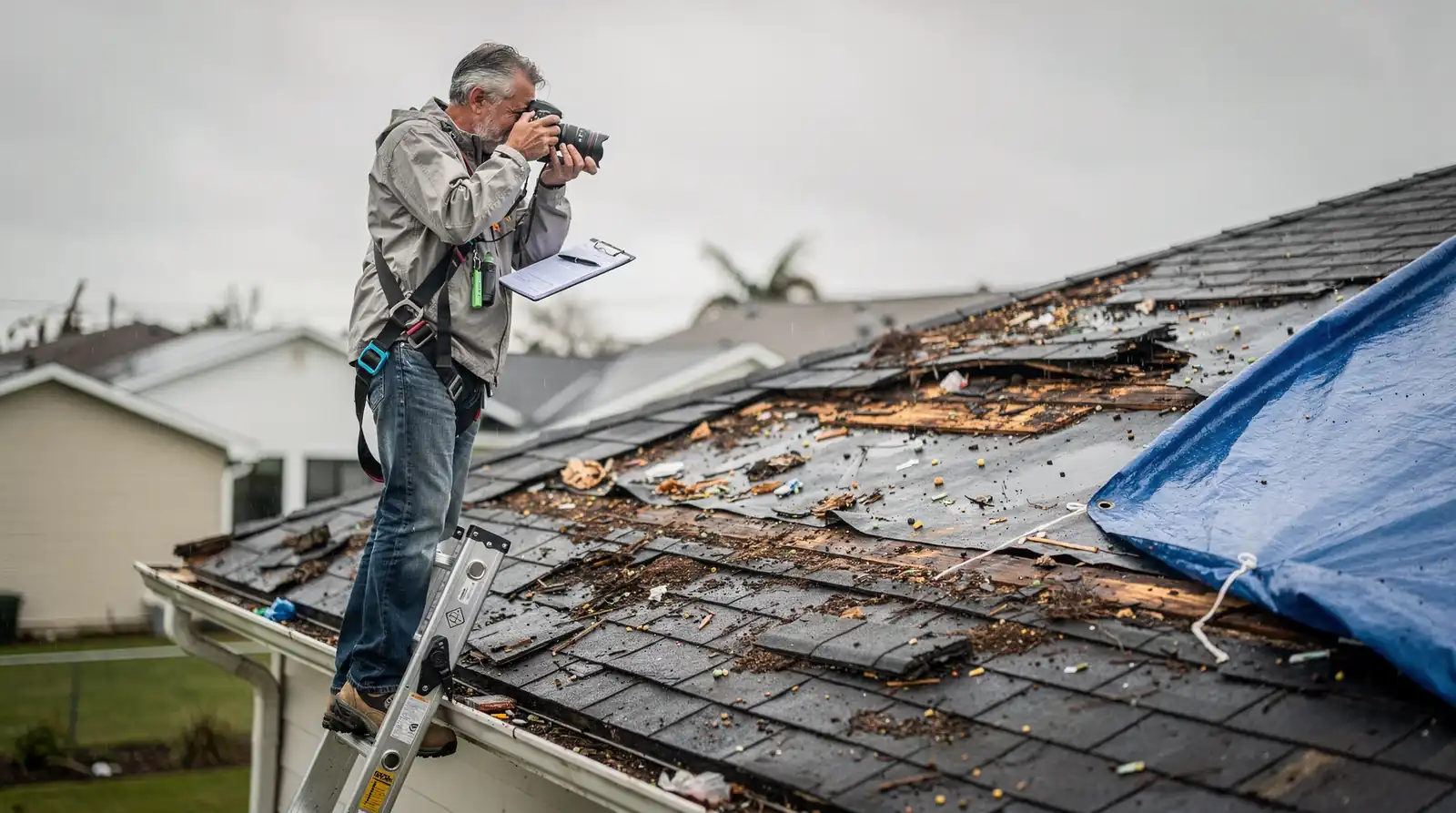
Safety and preservation come first after a hurricane. Document roof openings before temporary repair work begins. Early images often show fresh shingle loss that later photographs cannot capture. This visual record proves the damage existed immediately after the storm.
What documents should a homeowner gather first?
The insurance policy declarations page is the essential starting point. Homeowners need the policy number, coverage limits, and hurricane deductible amount. Mortgage information and a detailed inventory of damaged property strengthen the claim file. Contact logs with dates and representative names create a paper trail that protects against delays.
How does temporary protection affect the claim?
Emergency tarping prevents further water intrusion and satisfies the policyholder’s duty to mitigate damage. Replace Your Roof provides fast, efficient roof repair services to protect homes after storm damage. The company serves Florida and Upstate New York with durable, code-compliant solutions. Receipts for tarps, plywood, and labor become part of the claim reimbursement request.
Contact the insurer as soon as possible while staying safe. Hurricanes leave behind damage and huge messes that worsen with each passing day. A prompt notice locks in the claim date and starts the adjuster assignment clock. Delayed reporting gives carriers grounds to question whether the damage came from the named storm.
How do you document roof damage for insurance?
Documenting roof damage begins with capturing clear evidence before any temporary repairs start. Early images of fresh shingle loss, lifted flashing, and broken tiles build a clean record from day one. The Kuhn Raslavich firm emphasizes that photos taken before emergency tarping or board-up work often prove decisive when insurers evaluate a hurricane roof insurance claim Florida homeowners file after a storm.
A thorough roof damage claim Florida adjusters review depends on more than a few snapshots. Policyholders who compile a complete evidence package position themselves for a fairer outcome. The documentation should include several key items.
What evidence strengthens a Florida roof claim process?
A strong Florida roof claim process relies on organized, timestamped records. Insurers scrutinize every detail, and gaps in documentation lead to reduced settlements or outright denials.
- Photographs and video of all roof openings, damaged sections, and surrounding property taken from multiple angles
- Temporary protection receipts for tarps, plywood, or emergency services that prevent further water intrusion
- A detailed contact log recording every call, email, and conversation with the insurance carrier, including dates and representative names
- Written notice to the carrier submitted promptly, which triggers Florida’s statutory claim-handling timelines
How do temporary repairs affect a storm damage roof replacement claim?
Emergency repairs protect the property but complicate a storm damage roof replacement claim if undocumented. Photographing every roof opening before covering it preserves the original damage state. Save all material receipts and contractor invoices. These records demonstrate that the homeowner acted reasonably to mitigate losses, a requirement in most Florida policies. Without this paper trail, insurers frequently dispute whether the damage occurred during the covered storm event.
Replace Your Roof prioritizes durability and reliability in every project, ensuring each property receives the protection it deserves. The company’s commitment extends beyond completing the job. Every project receives meticulous care and attention, from initial assessment through final roof repair and replacement. This disciplined approach mirrors the documentation standards that produce successful insurance outcomes.
What is the Florida roof claim process step by step?
A Florida roof claim process follows a structured sequence governed by state law and insurance policy terms. Policyholders who skip steps risk claim delays or outright denials. The hurricane roof insurance claim Florida procedure demands meticulous documentation from the first moment after a storm passes.
Filing a roofing insurance claim during recovery creates stress and confusion. Important steps are often missed when a property owner focuses on safety and emergency repairs, according to CMS Law Group. The roof damage claim Florida timeline begins immediately after the storm clears.
What should a homeowner do in the first 24 hours after roof damage?
The first priority is safety and emergency mitigation. A property owner must photograph all damage before making temporary repairs. Tarping broken sections and clearing debris prevents further water intrusion. Every receipt for emergency materials must be saved for reimbursement.
How does a policyholder formally start the claim?
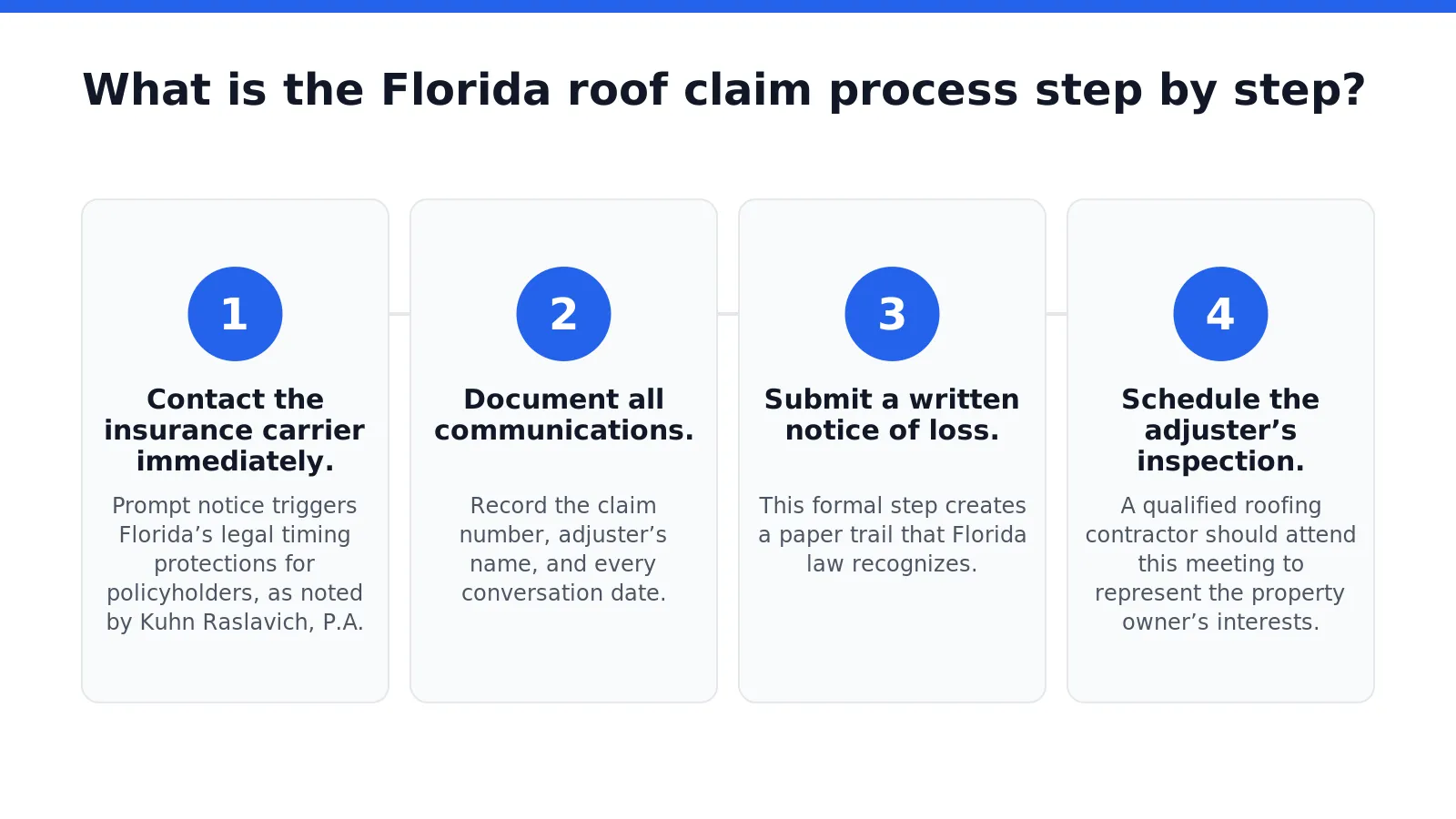
- Contact the insurance carrier immediately. Prompt notice triggers Florida’s legal timing protections for policyholders, as noted by Kuhn Raslavich, P.A.
- Document all communications. Record the claim number, adjuster’s name, and every conversation date.
- Submit a written notice of loss. This formal step creates a paper trail that Florida law recognizes.
- Schedule the adjuster’s inspection. A qualified roofing contractor should attend this meeting to represent the property owner’s interests.
The Florida hurricane insurance claims process involves complex insurance policies, specific deductibles, and the possibility of claim denials, explains Merlin Law Group. A storm damage roof replacement requires precise scope-of-loss documentation. The adjuster’s initial estimate often misses hidden structural damage.
Replace Your Roof serves as a full-service roofing specialist handling every aspect of a roof’s needs, from routine inspection to complete replacement. The company’s technicians identify damage that an adjuster might overlook. Their documentation supports a complete claim package.
What happens after the adjuster’s inspection?
The carrier issues a claim decision and an initial payment. A property owner must compare the adjuster’s scope of loss against the contractor’s estimate. Discrepancies require a formal dispute letter with photographic evidence. Florida law mandates specific carrier response timelines once a claim is reported. Missing these deadlines forfeits policyholder leverage.
How do you handle the adjuster visit without getting underpaid?
A methodical adjuster visit prevents underpayment on a hurricane roof insurance claim Florida homeowners file after severe storms. Preparation turns the inspection into a documented event rather than a rushed walkthrough. A careful claim puts the property owner in a stronger position if the insurer questions the cause, scope, or cost of the loss, according to Kuhn Raslavich, P.A.
What should a homeowner have ready before the adjuster arrives?
The claim file must be complete and organized. Gather all storm-date photos, close-up damage shots, and wide-angle roof views. Include any repair receipts for temporary tarping or emergency work. Have the original policy declarations page and all claim correspondence in one folder. This documentation prevents key proof from being omitted during the inspection.
Should a roofing contractor be present during the inspection?
A qualified contractor adds technical weight to the meeting. Replace Your Roof exceeds the roofing standards of every location it serves, accounting for local building codes and property type. The company’s technicians use the best materials for every job and identify damage an adjuster might overlook. Their presence ensures the adjuster sees every lifted shingle, creased flashing, and impact point.
Follow these steps during the visit:
- Walk the entire perimeter with the adjuster and point out each damaged area.
- Provide the photo packet and repair receipts as a physical record.
- Ask the contractor to explain code upgrades that affect replacement scope.
- Take notes on the adjuster’s comments and request a copy of the report timeline.
A rushed claim leaves out proof that supports full replacement value. Methodical documentation during the adjuster visit protects against low estimates. The Florida roof claim process rewards thoroughness at this stage. Every missed detail becomes a deduction later.
What common mistakes should you avoid after a hurricane?
Avoiding critical errors after a hurricane protects both safety and the success of a hurricane roof insurance claim Florida homeowners file. The most damaging mistakes happen in the first hours when urgency overrides careful documentation. A rushed roof damage claim Florida insurers receive often lacks the proof needed for full compensation.
Why is climbing onto a damaged roof dangerous?
Hurricanes leave behind fallen branches, exposed wires, and wet surfaces that make repair jobs far more dangerous, according to People’s Trust Insurance. Property owners who attempt DIY inspections risk serious injury from unstable structures. Professional roofers carry safety equipment and know how to spot hidden structural failures. The cost of an emergency room visit far exceeds any inspection fee.
What documentation errors lead to claim denial?
Insufficient photographic evidence remains the top reason insurers reduce or deny storm damage roof replacement coverage. Policyholders should photograph every angle of damage before making temporary repairs. Missing photos of interior water stains, displaced shingles, and dented flashing create gaps insurers exploit. A complete visual record establishes the storm as the direct cause.
The Florida roof claim process demands specific steps in a precise order. Numbered actions prevent the mistakes that delay settlements:
- Document all visible damage with time-stamped photos before touching anything.
- Make only temporary emergency repairs to stop active leaks.
- Save every receipt for tarps, plywood, and water mitigation supplies.
- Contact the insurance carrier immediately to open a claim and request an adjuster visit.
- Schedule a professional roof inspection before meeting with the adjuster.
Replace Your Roof delivers exceptional roofing services that consistently exceed industry standards in durability and reliability. The company prioritizes clear communication throughout the claims process. Policyholders who follow a methodical sequence avoid the anxiety that comes from incomplete filings. Knowing the correct steps eases uncertainty during recovery, as People’s Trust Insurance emphasizes in its post-hurricane guidance.
Conclusion
A property owner who follows this methodical sequence (documenting damage, securing temporary repairs, and attending the adjuster visit with a qualified contractor) positions the claim for full replacement value rather than a reduced settlement. The next step is to compare the carrier’s scope of loss against the contractor’s estimate and file a formal dispute with photographic evidence for any discrepancy.