
A Southwest Florida hurricane prep checklist begins months before June 1, when permits and materials remain available. Replace Your Roof recommends scheduling a professional inspection to identify loose shingles, cracked flashing, or worn sealant. Securing loose items and installing impact-rated covers for vents and skylights prevents water intrusion during a storm.
Why prepare your roof before hurricane season?
Hurricane season in Florida runs from June 1 through November 30. Peak activity concentrates between August and October. A roof inspection before hurricane season identifies vulnerabilities that turn into catastrophic failures during a storm. Southwest Florida homeowners face this threat every year without exception.
The stakes are immediate and financial. Unrepaired damage lets wind-driven rain penetrate the roof deck. Water intrusion destroys insulation, rots structural framing, and collapses ceilings. A compromised roof also voids insurance coverage for interior water damage when pre-existing conditions are documented. The cost of emergency tarping and interior remediation far exceeds the cost of proactive repairs.
Replace Your Roof prioritizes durability and reliability in every project. The company safeguards homes and buildings with the highest quality roofing solutions available. Its commitment to precision protects properties across Southwest Florida from the predictable violence of hurricane season.
What does a Florida hurricane season roof inspection cover?
A thorough inspection examines three critical zones. First, the field of the roof receives scrutiny for missing, cracked, or lifted shingles. Second, all flashings around chimneys, vents, and skylights are checked for gaps and corrosion. Third, the soffit and fascia are evaluated for rot that allows wind to pressurize the attic.
How early should a homeowner prepare a roof for hurricane season?
Preparation begins months before the first named storm. Roofing contractors in Fort Myers, Naples, and Cape Coral book solid by late spring. Scheduling a professional assessment in March or April secures a spot on the calendar. Waiting until a watch is issued leaves a homeowner with no options and an exposed roof deck.
A hurricane roof prep checklist turns preparation into a systematic process. Follow these steps to secure the structure before peak season arrives.
- Schedule a professional roof inspection before hurricane season to document all existing damage.
- Secure loose shingles and replace any that are missing or cracked.
- Seal all roof penetrations with fresh flashing and high-grade polyurethane caulk.
- Clean gutters and downspouts to prevent water backup under the roof edge.
- Trim overhanging branches that scrape shingles or threaten to puncture the membrane.
At Replace Your Roof , we are your full-service roofing specialists, handling every aspect of your roof’s needs. Whether you require a routine inspection, a minor repair, or a complete roof replacement, our team of highly skilled and experienced professionals is here to assist you. A Florida hurricane season roof demands proactive investment. The alternative is a preventable loss that no homeowner in Southwest Florida can afford.
What tools and materials do you need?
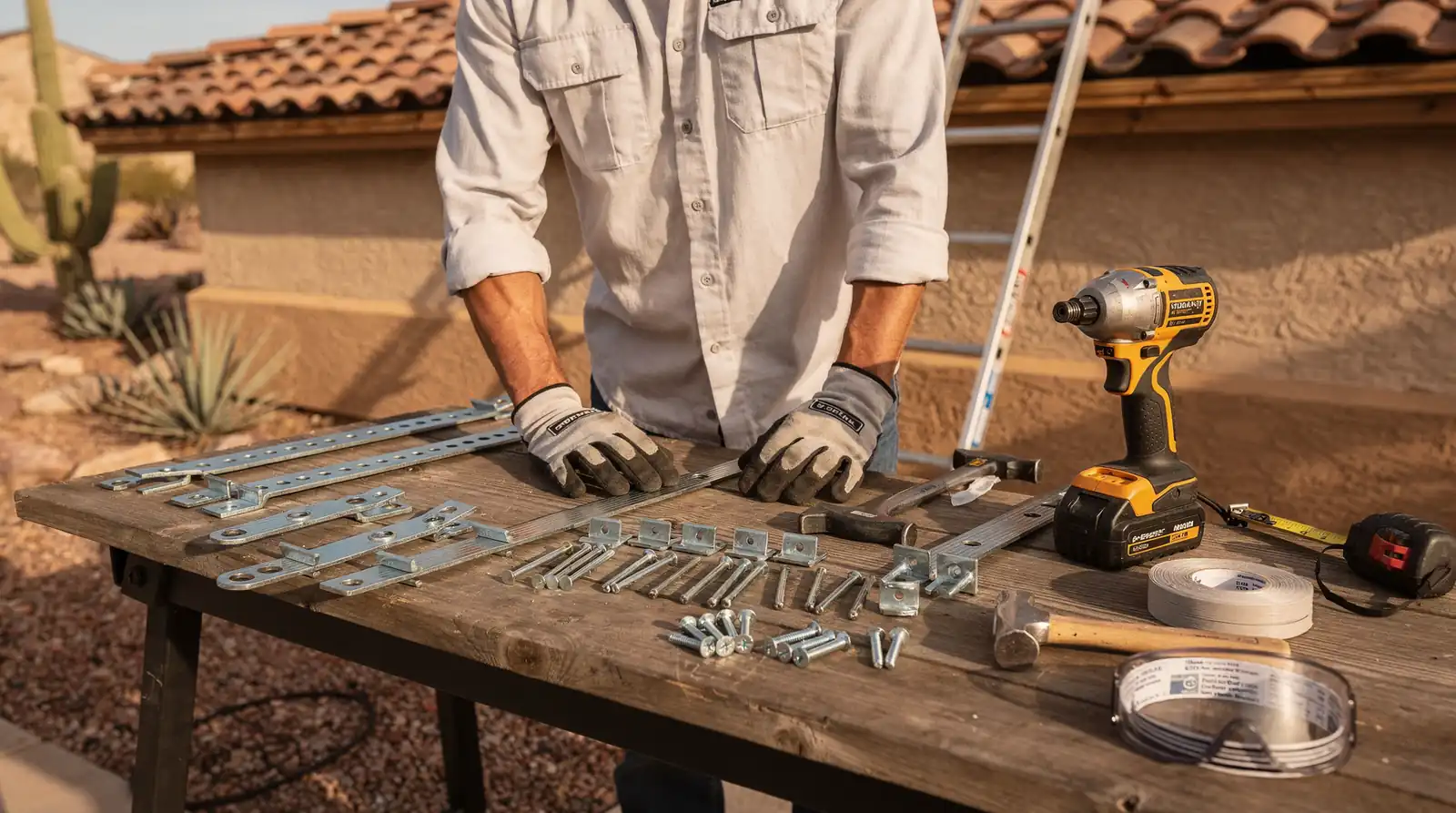
A proper hurricane roof prep checklist demands specific tools and materials gathered well before storm threats emerge. The work that actually protects a Southwest Florida home happens months out, while permits, materials, and crews remain available. Waiting until a watch is issued guarantees empty shelves and unavailable contractors.
What inspection tools should homeowners keep on hand?
A sturdy extension ladder rated for the user’s weight plus tool loads provides safe roof access. Binoculars allow ground-level inspection of ridge vents, flashing, and shingle edges without climbing. A bright flashlight reveals attic leaks, water stains, and daylight penetrating through decking seams.
What repair materials belong in a storm prep kit?
Roofing cement in standard caulk tubes seals lifted shingles and minor flashing gaps immediately. Rolled self-adhering flashing tape patches vent boots and pipe collars until permanent repairs are scheduled. Galvanized roofing nails, a hammer, and a flat pry bar secure loose metal edging and replace missing fasteners. Replace Your Roof takes pride in using top-quality materials and employing the latest techniques to ensure roof longevity and functionality. The company’s highly skilled technicians use the best materials for every job, a standard homeowners should mirror when selecting emergency repair supplies.
What protective gear is essential?
Safety glasses shield eyes from wind-blown debris during any rooftop work. Non-slip footwear rated for steep surfaces prevents falls on tile or metal roofing common across Fort Myers and Naples homes. Heavy work gloves protect hands when handling sharp flashing edges and rough shingle granules. A fall-arrest harness rated for the user’s weight adds critical protection on pitches steeper than 4:12.
How to inspect your roof for hurricane damage?
A roof inspection before hurricane season identifies vulnerabilities that lead to catastrophic water intrusion. Southwest Florida homeowners face peak storm activity from August through October, making early detection the difference between minor repairs and full roof replacement.
The hurricane roof prep checklist for Fort Myers, Naples, Cape Coral, and Sarasota properties starts with a ground-level visual sweep. Binoculars reveal damage without ladder risk. Walk the perimeter slowly. Look for anything that breaks the roof’s uniform surface.
What should homeowners look for during a roof inspection?
Missing or damaged shingles top the list. Curling edges, cracking surfaces, and missing tabs signal that wind uplift will find entry points. These defects worsen exponentially once tropical-storm-force winds arrive.
- Missing shingles expose the underlayment to direct rain
- Curling or cracking indicates aging materials near failure
- Missing tabs create gaps where wind gets underneath
- Loose flashing around vents and chimneys invites leaks
How should a homeowner document roof damage?
Photograph every defect from multiple angles. Date-stamp each image. This documentation supports insurance claims if a storm causes further damage. Property owners who skip this step lose leverage during claim disputes.
Replace Your Roof serves as a full-service roofing specialist for Southwest Florida properties. The company handles routine inspections, minor repairs, and complete roof replacements. Technicians assess every aspect of the roof’s condition.
When should a professional inspection be scheduled?
Schedule professional evaluation before June 1. Contractors book solid once watches are issued. Waiting until a storm is three days out leaves homeowners without options.
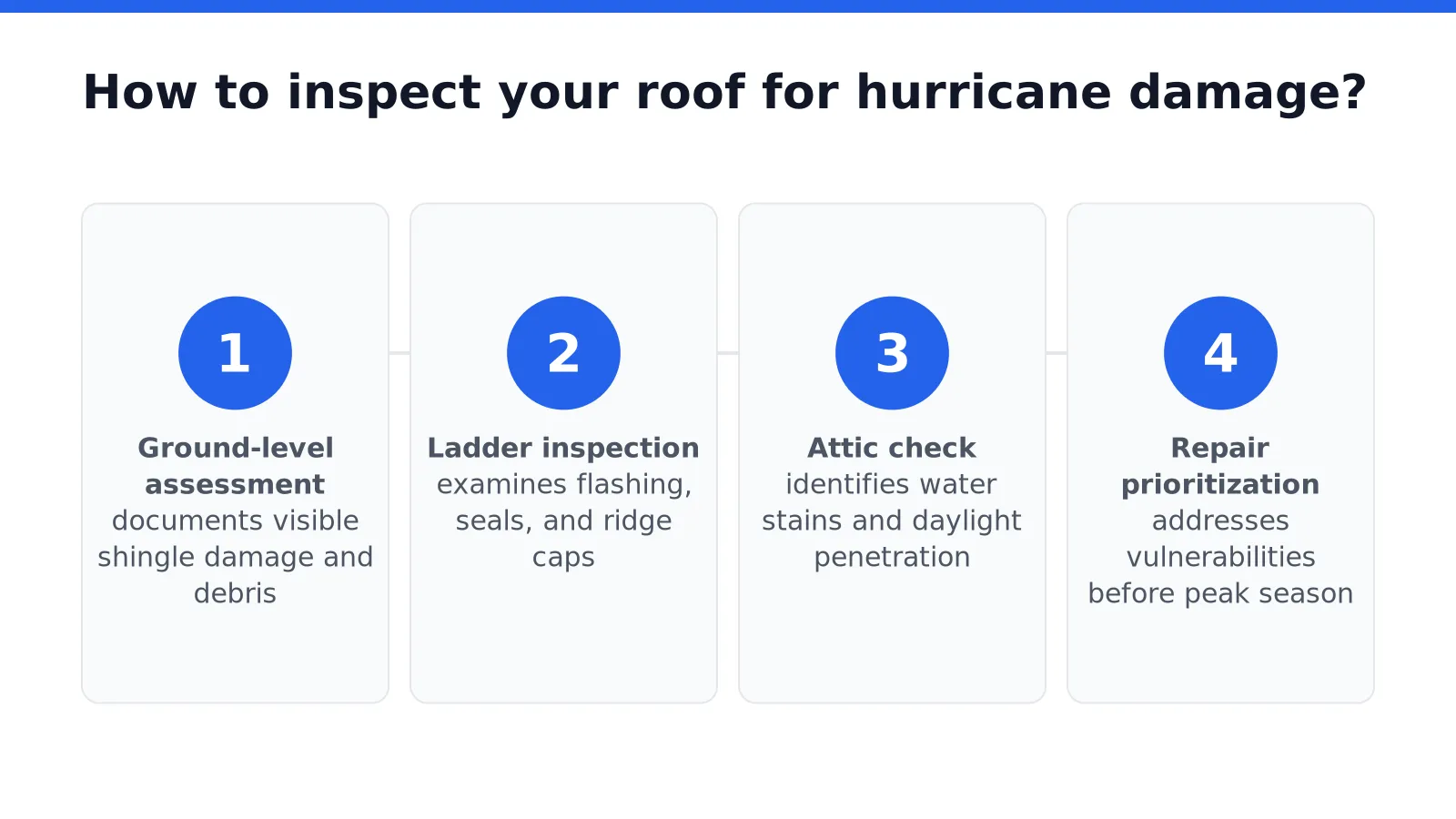
The inspection process follows a clear sequence:
- Ground-level assessment documents visible shingle damage and debris
- Ladder inspection examines flashing, seals, and ridge caps
- Attic check identifies water stains and daylight penetration
- Repair prioritization addresses vulnerabilities before peak season
Replace Your Roof prioritizes clear communication throughout the inspection process. The company keeps clients informed at every stage and strives to exceed expectations with exceptional customer service. A documented inspection report gives Southwest Florida homeowners the evidence needed for insurance readiness.
What steps reinforce your roof against high winds?
Reinforcing a roof against hurricane-force winds starts with a thorough roof inspection before hurricane season begins. A professional evaluation identifies loose shingles, deteriorated flashing, and weak points that fail under uplift pressures exceeding 130 mph. Without this inspection, property owners in Southwest Florida risk catastrophic water intrusion when the next storm makes landfall.
What does a wind-resistant roof renovation include?
A Florida hurricane season roof renovation involves improving, repairing, or upgrading an existing roof structure. Skilled technicians use premium materials to strengthen the entire assembly, from decking to ridge vents. The work targets every connection point where wind can gain purchase and tear sections away.
Property owners who prepare roof for hurricane conditions follow a systematic approach. The steps below outline the reinforcement process:
- Schedule a professional inspection to document current roof condition and identify vulnerabilities before wind events expose them.
- Secure or replace loose shingles and tiles at the first sign of lifting, since a single missing piece creates an entry point for wind-driven rain.
- Reinforce roof-to-wall connections with hurricane straps or clips that anchor the structure to the framing below.
- Seal all penetrations around vents, pipes, and chimneys with high-grade flashing and waterproof sealant.
- Clear gutters and trim trees as part of a complete hurricane roof prep checklist, removing debris that becomes airborne projectiles in high winds.
Why do local building codes matter for wind resistance?
Replace Your Roof exceeds the roofing standards of every location it serves, including Southwest Florida’s stringent wind-resistance codes. These regulations vary by building type and geography, reflecting the specific threats coastal properties face. Compliance alone provides a baseline; exceeding those requirements delivers measurable protection against storm damage.
The company merges traditional craftsmanship with modern technology on every project. This approach emphasizes excellence, safety, and a commitment to customer satisfaction that goes beyond minimum code requirements. For property owners considering a full upgrade, roof replacement services deliver systems engineered specifically for hurricane-prone environments.
How do gutters and landscaping affect wind performance?
Clogged gutters force water backward under the roof edge during heavy rain, saturating the decking and compromising structural integrity. Overhanging branches scrape against shingles in sustained winds, stripping away the protective granule layer. Both conditions accelerate roof deterioration and increase the likelihood of failure during a storm.
When should you call a professional roofer?
A professional roofer should be called before hurricane season begins, not after a storm exposes hidden damage. The hurricane roof prep checklist works best when a licensed contractor completes it months ahead of peak storm activity. Waiting until a watch is issued leaves homeowners competing for crews already booked solid across Lake County and Southwest Florida.
Homeowners face a clear choice. They can follow the checklist themselves or schedule a professional inspection. Either path prepares the roof, but a trained eye catches failures that untrained eyes miss.
What signs indicate a professional inspection is necessary?
Several conditions demand immediate professional attention. Missing shingles, lifted flashing, or visible granule loss signal that the roof needs repair before winds arrive. A sagging deck or water stains on ceilings indicate structural compromise that no checklist can fix.
- Inspect the roof surface for missing, cracked, or curling shingles.
- Check flashing around vents, chimneys, and skylights for separation.
- Examine the attic for daylight penetration or moisture staining.
- Document any damage with dated photographs for insurance records.
- Contact a licensed roofer serving Fort Myers and Cape Coral for a formal assessment.
Replace Your Roof serves the majority of southwestern Florida towns, including Fort Myers and Cape Coral. The company provides roof replacement, roof repair, and exterior home improvements for residential and commercial properties. Homeowners seeking a roof inspection before hurricane season can schedule service directly with the company’s team.
How quickly can a roofer respond before a storm?
Response time depends on when the call is placed. Calls made in May or early June receive prompt scheduling. Calls made 48 hours before landfall face limited availability, as crews prioritize existing contracts and emergency repairs.
The company’s experts handle inspections quickly and efficiently. Property owners who delay risk losing the inspection window entirely. A roof that fails during a storm costs far more than the inspection that would have caught the problem.
Conclusion
Southwest Florida property owners who complete this hurricane roof prep checklist before June secure their buildings against catastrophic failure. A professional inspection identifies vulnerabilities that untrained eyes miss, and reinforcement work completed early eliminates the scramble when storm watches appear. Schedule the inspection now, not when the next storm enters the Gulf.