
Florida building code requires a secondary water barrier beneath roof coverings in high-velocity hurricane zones. Secondary water barrier Florida underlayment must meet specific testing criteria from HB 7057, ensuring protection against wind-driven rain. As a roofing company serving Florida and Upstate New York, our commitment lies in safeguarding your homes and buildings with the highest quality roofing solutions available.
What is a secondary water barrier in Florida?
A secondary water barrier Florida is an additional protective layer installed beneath the roof covering. This layer prevents water intrusion during high-wind and heavy-rain events common in hurricane-prone regions. Without this barrier, wind-driven rain penetrates gaps in the primary roof covering. The resulting leaks cause structural rot, mold growth, and interior damage that insurance may not fully cover.
Florida building code mandates this barrier for specific reroofing projects. The requirement activates when a roof covering is removed and replaced. In High-Velocity Hurricane Zones (HVHZ), the mandate applies to all such replacements. Property owners who skip this step face code violations and failed inspections. They also lose a critical defense against the state’s most destructive storms.
The legal foundation traces back to Florida’s HB 7057. This legislation aimed to improve hurricane resilience across the state. The Florida roof sealed deck concept emerged from the law’s intent to create a level playing field for approved barrier products. Manufacturers must submit materials for rigorous testing before acceptance.
What testing must a secondary water barrier pass in Florida?
Products used as a secondary water barrier must meet specific performance criteria. Testing evaluates wind resistance and nail sealability. A barrier that fails to self-seal around fastener penetrations creates leak paths. Wind uplift testing confirms the material stays bonded during hurricane-force conditions. Only products passing these protocols qualify under Florida code.
How does a secondary water barrier differ from standard roof underlayment?
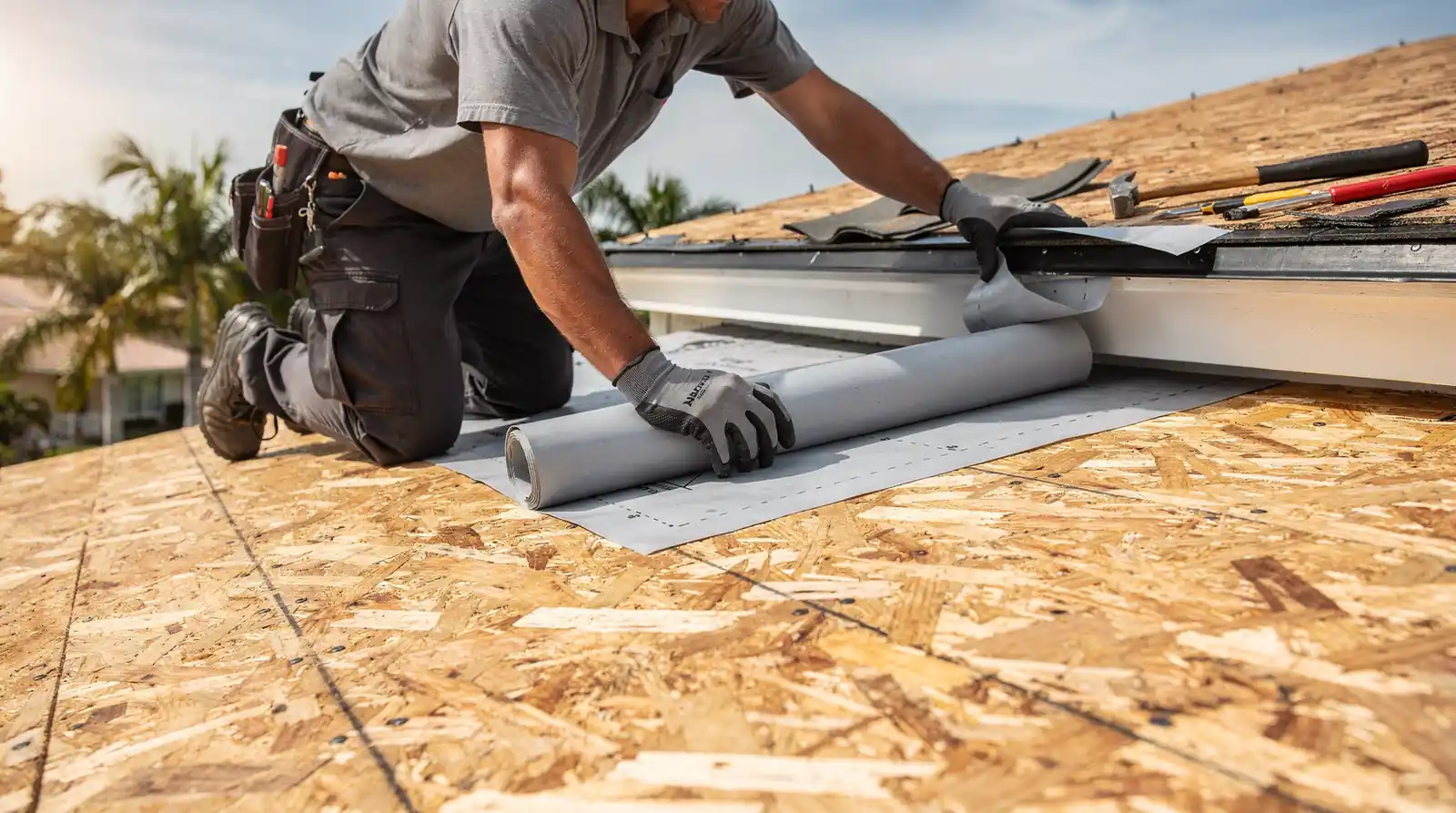
Standard roof underlayment Florida code requirements focus on basic moisture protection. A secondary water barrier adds a dedicated waterproofing layer above the deck. Peel and stick underlayment represents one common method. This material adheres directly to the roof deck and seals around nails. The barrier functions independently of the primary roof covering. When shingles or tiles blow off, the sealed deck continues shedding water.
What does Florida code require for roof underlayment?
Florida’s building code mandates specific roof underlayment standards to protect structures from hurricane-force winds and torrential rainfall. The roof underlayment Florida code requirements center on creating a continuous waterproofing layer beneath the primary roof covering. Without proper underlayment, wind-driven rain penetrates roof assemblies and causes structural decay, mold growth, and interior damage that insurance may not fully cover.
The 2023 Florida Building Code, Residential, Eighth Edition establishes the current benchmarks for roof assemblies statewide. These standards address attachment methods, material performance ratings, and overlap specifications that vary by roof slope and exposure. Property owners who skip code-compliant underlayment during replacement risk failed inspections and denied permits.
What is a secondary water barrier in Florida roofing?
A secondary water barrier Florida requirement applies when roof coverings are removed and replaced. This barrier serves as a backup waterproofing layer that prevents moisture intrusion if the primary roof covering fails during a storm. In High-Velocity Hurricane Zones (HVHZ), the code mandates specific secondary water barrier methods. These zones cover Miami-Dade and Broward counties, where wind speeds routinely exceed 140 mph.
The barrier must seal around fastener penetrations and withstand prolonged water exposure. Peel and stick underlayment products meet this standard by forming a self-adhering membrane directly to the roof deck. Modified bitumen sheets with polymer-modified adhesive backings create a watertight seal that traditional felt cannot match.
How does a sealed roof deck improve hurricane protection?
A Florida roof sealed deck configuration bonds the underlayment to the sheathing so that even if wind rips off shingles or tiles, the deck remains watertight. This approach reduces water intrusion by sealing every fastener point. The code recognizes sealed deck assemblies as a wind mitigation feature that strengthens the entire roof system.
Standards vary based on location, building type, and local building codes. Coastal properties face stricter uplift requirements than inland structures. Commercial buildings often require thicker underlayment and additional fastening patterns compared to residential projects. Contractors must verify the applicable code edition for the specific jurisdiction before starting any roof replacement.
How does peel and stick underlayment meet Florida code?
Peel and stick underlayment creates a Florida roof sealed deck by bonding directly to the roof sheathing. This adhesive membrane forms a watertight barrier that satisfies the state’s secondary water barrier mandate. Florida building code requires a secondary water barrier whenever roof covering is removed and replaced, with stricter provisions applying in High Velocity Hurricane Zone regions.
The product’s self-adhering backing seals around fastener penetrations. That sealing action prevents water intrusion at nail holes, a common failure point during wind-driven rain events. Under HB 7057 guidelines, a secondary water barrier must demonstrate wind resistance and nail sealability through approved testing criteria. Manufacturers submit products for evaluation against these performance standards before acceptance for hurricane mitigation retrofits.
What testing does peel and stick underlayment need to pass?
Testing focuses on two failure mechanisms. Wind resistance testing measures whether the membrane stays bonded when uplift forces act on the roof assembly. Nail sealability testing confirms the adhesive grips fasteners tightly enough to prevent water migration around penetrations. Products that pass both evaluations meet the intent of HB 7057 for secondary water barrier applications.
Does a sealed roof deck qualify for insurance discounts?
A properly installed secondary water barrier Florida system supports hurricane mitigation verification. Programs like My Safe Florida Home recognize secondary water resistance as a qualifying retrofit feature. Documented compliance with the sealed deck requirement positions a property for potential premium reductions through state mitigation inspection programs.
Replace Your Roof installs roof underlayment Florida code compliant systems using top-quality materials and current installation techniques. The company’s approach ensures underlayment installations meet or exceed Florida code standards for durability and reliability.
Conclusion
Meeting Florida’s secondary water barrier requirements is not optional, it is a legal and structural necessity for any roof replacement. Property owners who install a code-compliant sealed deck assembly gain verified hurricane protection and a clear path through permit inspections. The next step is selecting a contractor who understands these standards and applies them correctly to your commercial building.