
A wind mitigation inspection in Florida qualifies a new roof for insurance discounts by verifying code-compliant materials and installation. Replace Your Roof installs systems meeting Florida Building Code requirements, enabling property owners to reduce premiums through state-approved loss mitigation credits. The inspection documents specific wind-resistant features for insurer review.
What is a wind mitigation inspection in Florida?
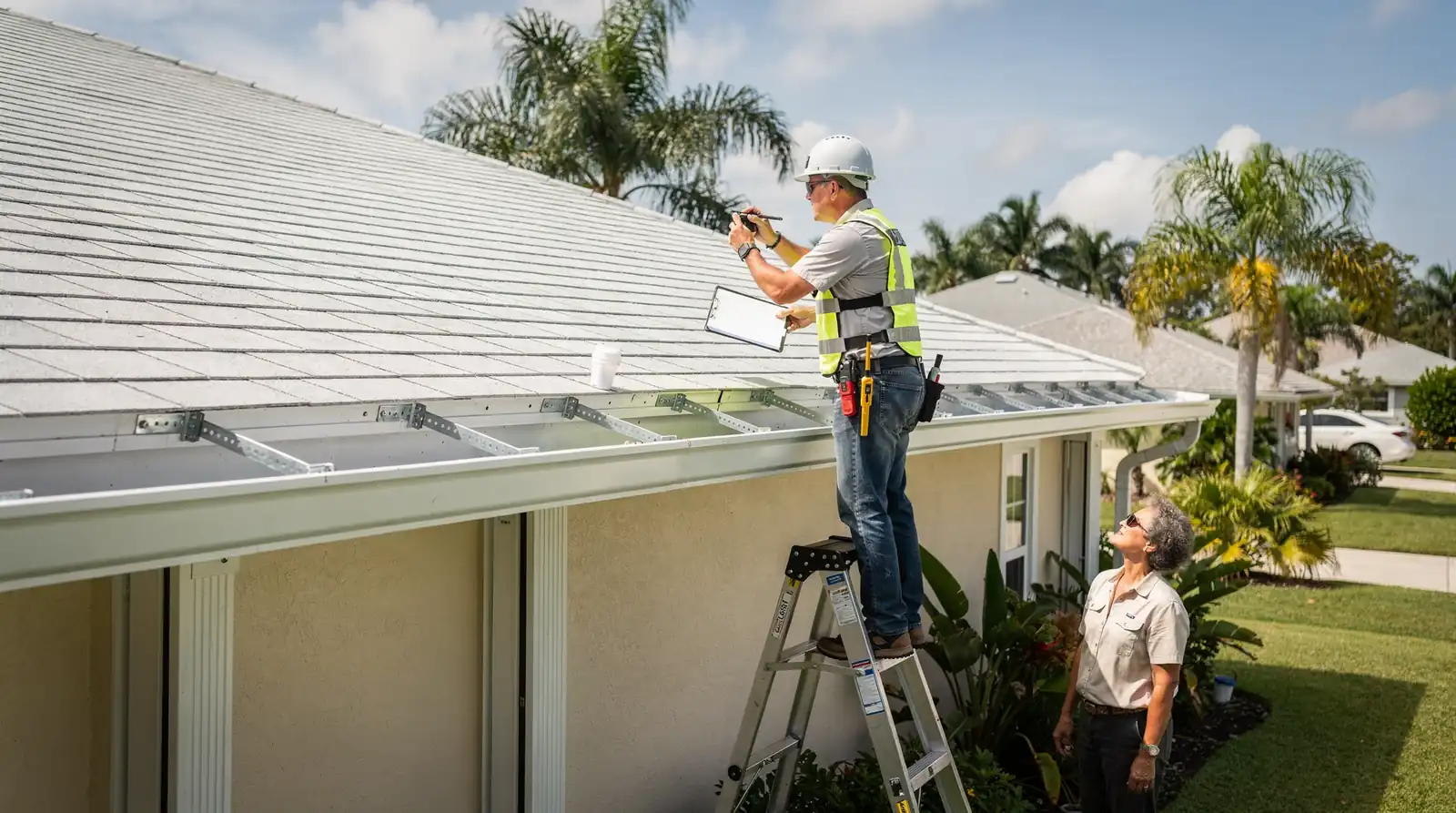
A wind mitigation inspection Florida evaluates how well a home resists hurricane-force winds. The inspection uses Florida’s official wind mitigation form, a standardized document that identifies specific construction features reducing wind damage risk. A licensed inspector examines the roof, openings, and structural connections. The resulting report determines which wind mitigation credits apply to the property.
The state of Florida requires insurance companies to offer discounts for homes with documented wind-resistant features. Homeowners who skip the inspection forfeit premium reductions that could total hundreds of dollars annually. The inspection cost is modest compared to the ongoing savings.
What does the inspection actually examine?
The inspector documents several construction details:
- Roof deck attachment method and nail spacing
- Roof-to-wall connection hardware, such as clips or straps
- Roof covering material and its wind rating
- Opening protection, including shutters or impact-rated glass
- Secondary water resistance barrier under the roof covering
Each feature receives a credit value on the form. The insurance company applies those credits to calculate the roof insurance discount Florida policyholders receive.
Do newer homes need an inspection?
Homes built after 2002 automatically receive default wind mitigation credits on some policies. However, additional discounts may still be available. A post-2002 home with upgraded roof attachments or impact-rated openings often qualifies for credits beyond the default level. The inspection verifies those upgrades.
Replace Your Roof serves Florida homeowners with roofing solutions that prioritize durability and reliability. A code-compliant roof replacement strengthens the structure and positions the property for maximum new roof insurance savings. The inspection then documents that value for the insurer.
How does a new roof trigger insurance savings?
A new roof installation unlocks wind mitigation credits through documented structural improvements. Florida law requires insurance companies to offer premium discounts when a roof meets specific hurricane-resistance standards. Without these upgrades, property owners forfeit hundreds of dollars in annual savings while leaving their buildings exposed to catastrophic wind damage.
The mechanism centers on a wind mitigation inspection Florida insurers recognize as the official verification process. A licensed inspector examines roof-to-wall connections, roof deck attachment methods, and the presence of a secondary water barrier. Each feature that exceeds basic code requirements generates a corresponding credit on the roof insurance discount Florida policyholders receive. The state mandates these discounts because hardened structures file fewer claims after hurricanes.
What specific roof features qualify for wind mitigation credits?
Three primary roof characteristics determine credit eligibility. Roof-to-wall connections using metal straps or clips outperform toenailed trusses. Roof deck attachment with 8d nails spaced at 6-inch intervals earns higher ratings than wider spacing. A secondary water barrier, which prevents moisture intrusion if shingles blow off, triggers additional savings.
New roof insurance savings materialize when the replacement incorporates all three features simultaneously. A roof built to the 2002 Florida Building Code or later automatically qualifies for certain baseline credits. Older homes retrofitted with modern fastening systems and water barriers during replacement close the gap between legacy construction and current standards.
How does the inspection translate findings into premium reductions?
The inspector completes Florida’s uniform wind mitigation form, assigning point values to each verified feature. Insurance carriers apply these points against their filed rating schedules. The resulting discount reduces the windstorm portion of the premium, which represents a substantial share of the total property insurance premium in coastal rating territories. Actual savings vary by carrier and location, but the inspection creates a permanent record that follows the property through policy renewals and ownership changes.
Replace Your Roof exceeds the roofing standards of every location it serves, including Florida’s stringent building codes. The company’s installations meet the technical thresholds inspectors look for during wind mitigation evaluations. A code-compliant replacement roof becomes a financial asset that pays returns through reduced insurance costs year after year.
What roof features qualify for wind mitigation credits?
A wind mitigation inspection in Florida evaluates specific roof features that reduce storm damage. These features directly translate into wind mitigation credits and lower insurance premiums. Florida’s high winds and water intrusion drive a disproportionate share of insurance claims across the state.
Several roof characteristics determine eligibility for credits. The inspection form used throughout Florida categorizes these features systematically.
How does roof deck attachment affect wind mitigation credits?
Proper roof deck attachment forms a primary credit category. Using ring-shank nails or screws to secure the deck to the trusses improves wind resistance significantly. This stronger connection prevents the roof from lifting off during hurricane-force winds.
What role does secondary water resistance play?
Secondary water resistance (SWR) qualifies for substantial premium discounts. SWR creates a sealed roof deck that blocks water intrusion even when shingles blow off. A self-adhering polymer-modified bitumen underlayment meets this standard. Without SWR, water enters through damaged shingles and causes interior destruction that multiplies repair costs.
Do impact-resistant materials increase wind mitigation credits?
Impact-resistant roofing materials enhance credit eligibility. Metal roofing systems and Class 4 shingles withstand debris strikes that shatter standard materials. Replace Your Roof installs shingle, metal, slate, and tile systems using top-quality materials and the latest techniques. These durable options maintain structural integrity during severe storms.
The combination of strong deck attachment, secondary water resistance, and impact-resistant coverings creates a roof system that qualifies for maximum roof insurance discount opportunities in Florida. Each feature addresses a distinct failure point that hurricanes exploit. Missing any one element leaves the structure vulnerable to forces that generate tens of billions in insured damages annually.
How much can you save with a new roof insurance discount?
A new roof in Florida unlocks substantial wind mitigation credits that slash the windstorm portion of a homeowner’s insurance premium. Progressive reports that policy credits can reach up to 90% of the windstorm coverage cost, inclusive of any Building Code Effectiveness Grading discount. Without these credits, Florida homeowners carry the full weight of hurricane-season premiums year after year.
The savings accumulate from multiple reinforcement features working together. A wind mitigation inspection Florida evaluates specific construction details: roof deck attachment, roof-to-wall connections, and secondary water resistance. Each feature that meets code standards earns a separate credit. Comegys notes that combining upgrades like storm shutters and a sturdy roof saves hundreds of dollars annually.
How are wind mitigation credits applied to a policy?
Credits take effect from the date of the wind mitigation inspection or the start of the policy, whichever occurs later. This means a mid-term inspection still delivers savings for the remaining coverage period. Homeowners who delay an inspection lose months of potential premium reduction.
What roof features generate the largest roof insurance discount Florida?
Three structural elements drive the biggest discounts. A reinforced roof deck attachment prevents uplift during high winds. Strong roof-to-wall connections keep the entire assembly anchored to the structure. Secondary water resistance, often a self-adhering membrane under the shingles, blocks water intrusion if shingles blow off. Replace Your Roof ensures these features meet Florida’s wind mitigation standards through precise installation and code-compliant materials.
New roof insurance savings vary by property, but the 90% credit ceiling on windstorm premiums creates a clear upper boundary. A homeowner paying annually for windstorm coverage could retain a significant portion. The actual amount depends on the inspection report and the insurer’s rating algorithm. A roof repair that upgrades attachment methods or adds water barriers often triggers credits even without a full replacement.
How do you get a wind mitigation inspection after a roof replacement?
A wind mitigation inspection Florida documents the wind-resistant features of a newly replaced roof. The inspection creates the official record insurers require before applying any roof insurance discount Florida. Without this documentation, a property owner forfeits premium reductions that Florida law mandates insurers must offer.
What does the inspection process involve?
A certified inspector examines the roof’s construction details. The inspection focuses on roof-to-wall connections, roof deck attachment, roof covering, and secondary water resistance. Each feature receives a rating that translates directly to insurance credit eligibility.
The inspector uses Florida’s standard wind mitigation form. This document structures how wind-resistant features are evaluated and reported. Once completed, the form goes to the insurance company for credit application.
Who performs a qualified wind mitigation inspection?
Only a licensed and/or qualified inspector completes the official Florida Wind Mitigation Inspection Form. The state’s insurance regulations tie premium discounts to this specific documentation. Homeowners should verify an inspector’s credentials before scheduling.
Replace Your Roof handles every aspect of a roof’s needs, from inspection to replacement. The company’s full-service approach ensures the documentation process moves efficiently after installation.
How are the inspection results submitted for credits?
The completed form is submitted directly to the homeowner’s insurance agent. The agent then determines which discounts apply based on the documented features. Florida law requires insurance companies to offer these discounts for qualifying wind mitigation measures. Homeowners should proactively request both the inspection and the credit application to secure available wind mitigation credits. Delaying this step leaves premium savings unclaimed month after month.
Conclusion
A wind mitigation inspection documents the specific features that unlock the premium reductions Florida law requires insurers to offer. After a roof replacement, scheduling this inspection creates the official record needed to apply credits. Homeowners who complete the inspection and submit the form to their agent secure the savings their upgraded roof earns.